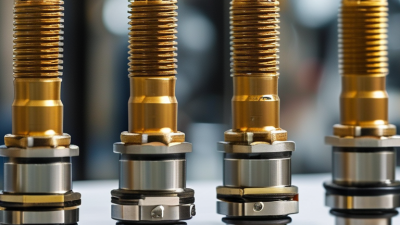
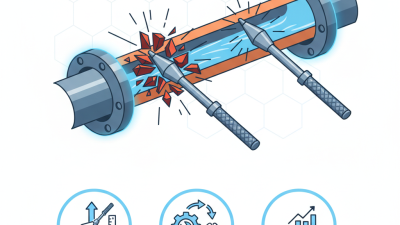
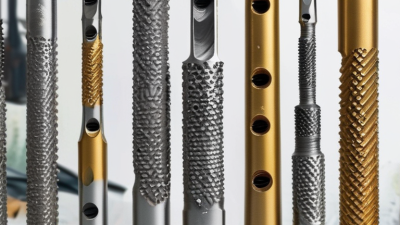
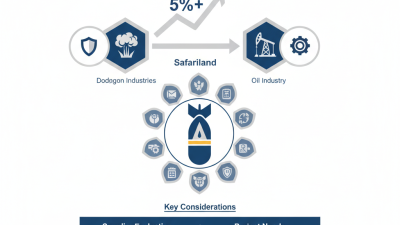
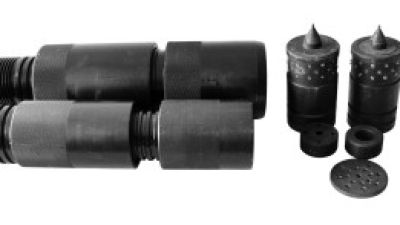
You know, when it comes to well construction these days, it's getting more selective, data-driven, and honestly, a bit tougher all around. The International Energy Agency’s Oil 2024 report predicts that oil demand will hit about 105.4 million barrels a day by 2030. That said, this still keeps complex completion activities pretty much in play, especially in mature fields or high-pressure areas. But here’s the thing—just knowing future demand isn’t enough when you're choosing a Mechanical Firing Head. Nope, real performance depends on the actual field conditions.
Stuff like temperature, pressure, deviations, run-in speed, fluid compatibility, shocks—these can all change how a tool performs. A head that works smoothly on the bench might act totally different after a long trip downhole. Tiny details really matter here. The quality of threads, shear settings—these are crucial, even if they seem small.
The Society of Petroleum Engineers keeps pushing for application-specific completion designs in their technical papers. Standards from API and ISO also emphasize the importance of documented qualification, traceability, and controlled manufacturing. These guidelines help buyers around the world compare suppliers beyond just their catalogue claims. But let’s be honest—standards can’t cover everything, and that lingering uncertainty is something we all need to pay attention to.
Dr. John Economides, a respected guy in the field of petroleum completions, once said, “A completion must be designed for the well, not just for the catalogue.” This really hits home, especially when you’re comparing mechanical, hydraulic, or electronic firing options. A Mechanical Firing Head needs to match the entire tool string, the operating environment, and your recovery plan—it's not just about getting the cheapest quote.
This guide takes a look at the top Mechanical Firing Head types for global buyers in 2026. We’ll explore their design principles, operational limits, what kind of documentation suppliers should provide, maintenance requirements, and how practical they are in the field. Honestly, it’s not perfect—product info can change, and regional support might be different depending on where you are. So, always double-check every detail before making a call—that's just good practice.
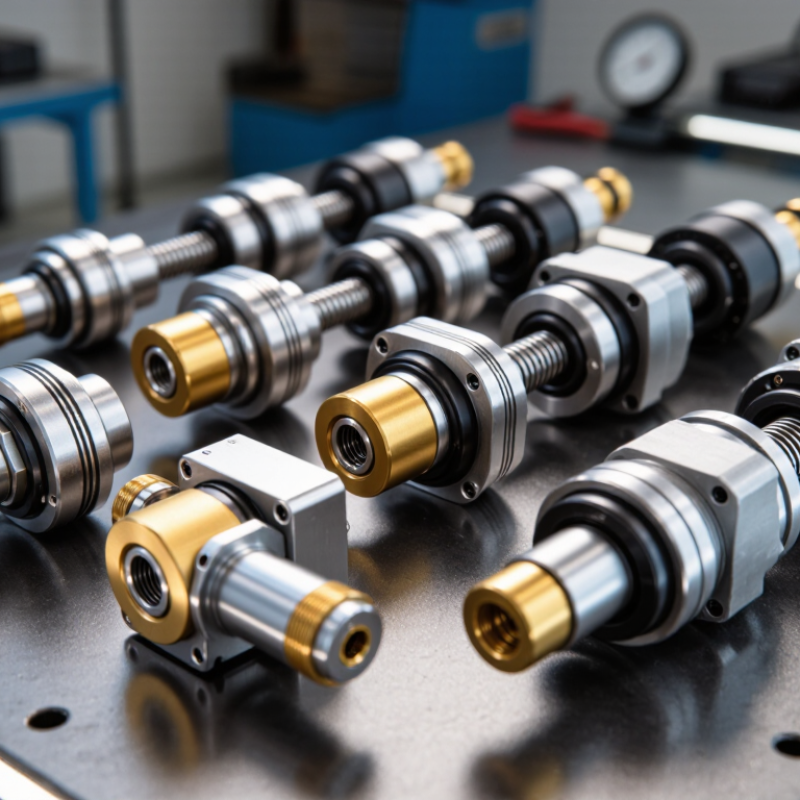
A mechanical Firing Head is a controlled downhole device used in regulated well-servicing operations. It transfers mechanical movement into a carefully managed activation sequence. Depending on the design, movement may come from pressure, mandrel travel, or controlled impact. Internal barriers normally prevent unintended activation during transport, assembly, and running.
The working principle is simple, but the engineering is not. A calibrated mechanism holds a striker or release element in a safe position. When approved conditions are reached, the mechanism moves and allows the next tool function to begin. Mechanical firing heads do not depend on electrical signals, which can simplify certain field environments. However, they require accurate installation, compatible equipment, and documented operating limits.
Common designs include pressure-activated, impact-activated, and mechanically indexed heads. Each type suits different completion layouts and service procedures. Buyers should review temperature ratings, pressure limits, connection standards, inspection intervals, and independent safety features. Small differences matter. A poorly matched head can delay a job or damage connected equipment.
Field experience shows that manuals alone are not enough. Crew training, pre-job checks, and traceable maintenance records remain essential. The terminology can also be confusing across regions. That is worth checking before purchase. No mechanical system is completely foolproof, so selection should follow local regulations, qualified engineering review, and the supplier’s certified instructions.
A Tcp Firing Head is a downhole completion device used to initiate controlled perforating operations. Its main components include a housing, firing piston, shear pins, hydraulic chamber, pressure seals, and a safety mechanism. The housing withstands high temperature and well pressure. The piston transfers pressure into mechanical movement. Shear pins hold the system until a planned pressure threshold is reached.
The operating principle is simple, but field conditions are not. Applied tubing pressure moves the piston after the calibrated shear value is exceeded. This movement releases the firing train while the tool remains aligned inside the tubing-conveyed assembly. According to the IEA Oil 2024 report, global oil demand may reach 105.6 million barrels per day by 2029. That demand increases pressure on completion reliability and operational efficiency. Still, demand alone does not justify rushed tool selection.
API Recommended Practice 67 emphasizes documented well-control practices, verification, and equipment suitability. Engineers should compare pressure ratings, temperature limits, shear tolerances, and seal materials against actual well data. A small pressure error can create a costly delay. It can also damage the completion string. Field experience shows that debris, fluid density, and temperature changes deserve more attention than many design sheets suggest. Some selection decisions remain imperfect. Rechecking assumptions before deployment is not weakness; it is sound engineering.
Mechanical firing heads are essential components in controlled industrial systems where reliable mechanical activation matters. The main types include drop bar, impact, spring-loaded, and pressure-actuated designs. Each type responds to a different operating condition.
A Drop Bar Firing Head uses a guided mass to create mechanical impact after reaching a defined position. It suits systems requiring a clear, direct activation sequence. Impact firing heads respond to sudden movement or contact. Spring-loaded heads provide stored mechanical energy and can support compact installations. Pressure-actuated designs rely on calibrated force from a mechanical piston or diaphragm. Selection depends on load, temperature, vibration, installation angle, and maintenance access.
Tips: Check the actuation force, travel distance, and reset method before purchase. Inspect guides, springs, seals, and locking parts during scheduled maintenance. Keep clear records of testing and replacement intervals. In my experience, small alignment errors can cause delayed activation. That detail is easy to miss. No design is perfect. A head that works well in a clean workshop may perform differently near dust, moisture, or continuous vibration. Buyers should request technical drawings, material specifications, and documented test procedures from qualified suppliers. Use these devices only within approved industrial systems and under trained supervision. Safety procedures must match local regulations and the equipment’s operating environment.
| Mechanical Firing Head Type | Primary Activation Principle | Typical Activation Input | Common Working Pressure Class | Typical Temperature Range | Deployment Compatibility | Resettable Design | Common Industrial Applications | Main Advantages and Selection Considerations |
|---|---|---|---|---|---|---|---|---|
| Drop-Bar Impact Firing Head | Direct mechanical impact from a dropped bar or impact mass. | Controlled axial impact after the tool reaches the planned setting depth. | Approximately 5,000–15,000 psi, depending on housing and application. | Approximately −20°F to 350°F (−29°C to 177°C). |
Vertical, deviated, and selected highly deviated well configurations. | Usually non-resettable after activation. | Tubing-conveyed perforating, mechanical downhole tools, and impact-triggered industrial assemblies. | Simple and independent of electrical power. Requires reliable impact delivery, adequate internal clearance, and careful compatibility with the conveyance method. |
| Ball-Drop Mechanical Firing Head | A dropped ball shifts an internal sleeve or piston, initiating the mechanical sequence. | Ball landing followed by applied hydraulic pressure or mechanical travel. | Approximately 5,000–15,000 psi for many downhole designs. | Approximately −20°F to 350°F (−29°C to 177°C). |
Vertical, deviated, and horizontal applications when ball passage and landing are controlled. | Generally non-resettable; some test mechanisms may be reusable. | Completion operations, selective downhole actuation, pressure-isolated mechanical tools, and multi-stage assemblies. | Provides a positive mechanical trigger and can support selective sequencing. Requires correct ball sizing, unobstructed passage, and reliable seat engagement. |
| Shear-Pin Pressure-Activated Firing Head | Pressure moves a piston or sleeve until calibrated shear pins fail. | Predetermined pressure increase across the firing-head piston. | Commonly available in 5,000, 10,000, and 15,000 psi classes. | Approximately −20°F to 350°F (−29°C to 177°C). |
Suitable for tubing, casing, wireline-conveyed, and other pressure-controlled systems. | No; shear pins normally require replacement after activation. | Pressure-operated completion tools, mechanical release systems, downhole perforating equipment, and safety-isolated actuators. | Clear pressure threshold and straightforward construction. The shear value must account for temperature, pressure ramp rate, fluid conditions, and manufacturing tolerances. |
| Jarring-Impact Mechanical Firing Head | Axial impact generated by upward or downward jarring moves an impact mechanism. | Controlled mechanical jarring force transmitted through the tool string. | Typically 5,000–15,000 psi, subject to the pressure housing design. | Approximately −20°F to 350°F (−29°C to 177°C). |
Deviated and horizontal wells where a dropped object may not travel reliably. | Usually non-resettable after firing. | Retrievable completion assemblies, intervention tools, mechanical release systems, and impact-actuated downhole equipment. | Useful when gravity-based activation is impractical. Requires accurate prediction of jarring force, tool-string response, and mechanical travel. |
| Pull- or Tension-Activated Mechanical Firing Head | An axial pull, tension load, or predetermined mechanical movement releases the firing mechanism. | Applied tensile load or programmed mechanical stroke. | Often designed within 5,000–15,000 psi pressure environments. | Approximately −20°F to 300°F (−29°C to 149°C). |
Wireline, slickline, tubing, and specialized mechanical intervention strings. | Generally non-resettable; inspection and component replacement are normally required. | Mechanical intervention tools, tension-set assemblies, release tools, and selected industrial actuation systems. | Can be used where pressure actuation is undesirable. Load calculations must consider friction, deviation, overpull, elongation, and accidental load transfer. |
| Mechanical Time-Delay Firing Head | A clockwork, friction-delay, or mechanically metered sequence provides delayed activation. | Initial mechanical trigger followed by a predetermined time delay. | Application-specific; pressure containment may range from atmospheric service to high-pressure downhole service. | Common industrial designs range from −20°F to 250°F (−29°C to 121°C). |
Fixed industrial equipment and selected controlled downhole applications. | Normally non-resettable. | Time-sequenced industrial systems, controlled mechanical release assemblies, and specialized intervention equipment. | Useful when a delay is needed after mechanical initiation. Delay accuracy can be affected by temperature, vibration, orientation, storage age, and internal friction. |
| Dual-Condition Mechanical Firing Head | Two independent mechanical conditions must be satisfied, such as pressure plus impact or position plus tension. | Combined inputs designed to reduce unintended activation. | Typically 5,000–15,000 psi for qualified downhole pressure housings. | Approximately −20°F to 350°F (−29°C to 177°C). |
High-deviation wells, complex completion strings, and safety-critical industrial installations. | Usually non-resettable after the final activation sequence. | Selective completion tools, intervention systems, mechanically interlocked actuators, and applications requiring enhanced activation control. | Offers improved resistance to single-input initiation. Selection should verify input order, tolerance stack-up, qualification testing, and compatibility with the complete tool string. |
For 2026 buyers, comparing mechanical firing head types should begin with the actuation principle. Shear-pin designs offer simple, predictable release behavior. Spring-loaded striker systems can provide faster mechanical response. Pressure-balanced piston designs suit environments where changing hydrostatic loads may affect timing. These are industrial well-service components, so selection must follow documented safety controls and local regulations.
Material choice is equally important. Stainless steel supports corrosion resistance, while nickel-based alloys perform better in sour or high-temperature conditions. The NACE IMPACT study estimated global corrosion costs at about 2.5 trillion US dollars annually, or 3.4% of global GDP. That figure makes surface protection and material traceability more than purchasing details. ISO 15156 compliance should be checked for equipment exposed to hydrogen sulfide. Small defects matter.
Performance testing should examine actuation force, temperature stability, pressure tolerance, sealing quality, and repeatability. ISO 12100 recommends structured machinery risk assessment, including foreseeable misuse. Ask suppliers for test conditions, not only peak ratings. A laboratory result at room temperature may not represent field behavior. This is where buyers often overestimate low-cost mechanisms. The judgment is incomplete. Field records, calibration evidence, and independent inspection provide stronger evidence than a polished brochure. Test the complete assembly.
For global buyers, a mechanical firing head should be treated as a safety-critical industrial component. Selection begins with the operating environment, not the lowest quotation. Confirm pressure ratings, temperature limits, load requirements, and corrosion exposure. The assembly should match the approved tool string and the site’s documented operating procedure.
Safety compliance varies by country and application. Buyers should request valid test reports, material certificates, inspection records, and traceable serial numbers. Hazardous-area work may require conformity with applicable explosion-protection rules, such as ATEX or IECEx requirements. Other projects may require pressure-equipment compliance, local oilfield regulations, or customer-specific qualification. Do not assume one certificate covers every market. Ask the manufacturer to identify the exact standard, edition, and product configuration tested.
Compatibility involves more than thread size. Check connection geometry, sealing surfaces, pressure integrity, temperature range, actuation interfaces, and material compatibility. Confirm that the head works with the planned carrier, tubing, casing, and control system. A catalog match is not proof. In practice, buyers sometimes overlook small differences in thread profile or seal material. That mistake can delay installation or create unsafe conditions. Request dimensional drawings and controlled compatibility statements before purchase. Use trained personnel for inspection, installation, and function checks. Keep clear records of storage conditions, maintenance, and rejected components. One uncomfortable question remains useful: what happens if the tool is exposed to conditions outside the original test range?
Safety Standards and Compatibility Requirements for Global Buyers
The chart shows common compatibility and review requirements for major mechanical firing-head configurations. A value of 1 indicates that the item should be verified during procurement; 0 indicates that it is not normally the primary selection criterion for that configuration. Buyers should confirm tool-string design, activation method, pressure and temperature ratings, material compatibility, explosive classification, and applicable API or ISO documentation before purchase.
Selecting the right mechanical firing head starts with the equipment, not the catalog. A shear-pin head may suit a simple tubing-conveyed assembly with stable pressure. A Hydraulic Firing Head can offer better control when pressure sequencing matters. However, hydraulic operation adds fluid compatibility and contamination concerns. Small debris can become a serious problem.
Field conditions require measurable limits. Check working pressure, temperature rating, differential-pressure margin, deviation, vibration, and completion-fluid density. API Specification 19B provides recognized perforator testing principles, but buyers should request tool-specific qualification records. ISO 14224 also supports consistent reliability-data collection across equipment classes. A supplier’s test sheet is useful. It is not the whole answer.
Markets change the purchasing logic. The IEA’s Oil 2024 report projects global oil demand at 105.4 million barrels per day by 2030. The World Bank’s Commodity Markets Outlook, April 2025, forecasts Brent crude near 64 dollars per barrel in 2025. These figures suggest tighter budgets in some regions, while mature fields still demand dependable intervention tools. Buyers should compare local certification, trained service availability, spare-part lead time, and disposal rules. A cheaper head may become expensive after one delayed intervention. I would also challenge a common assumption: the highest pressure rating is not automatically the safest choice. It can increase cost, handling complexity, and training needs without improving the actual job.
China’s factory-direct supply chain offers professionally engineered TCP gun systems and firing-head assemblies for qualified oilfield service operations. Designed for controlled downhole completion workflows, these components support the reliable activation of shaped-charge systems conveyed through tubing, drill pipe, coiled tubing, or slickline. Manufacturing focuses on dependable construction, consistent performance, and compatibility with demanding field conditions, helping operators improve equipment readiness while maintaining strict handling and inspection procedures.
As an experienced China-based manufacturer and supplier, we provide configurable solutions for approved industrial applications, with attention to quality control, traceability, and practical deployment requirements. Each firing-head assembly is produced to support predictable operation within a properly designed completion system and is subject to rigorous testing before shipment. Customers benefit from direct factory communication, technical documentation, and responsive support throughout product selection and service planning. All equipment should be installed, transported, and operated only by authorized professionals under applicable safety standards, regulatory requirements, and site-specific procedures.
Common designs include drop-bar, impact, spring-loaded, and pressure-actuated heads. Each responds to a different mechanical condition. Selection depends on the system.
A guided mass moves to a defined position and creates mechanical impact. It suits systems needing a clear activation sequence. Guide alignment matters.
Spring-loaded heads store mechanical energy for compact installations. They can provide quick response. Spring fatigue may reduce consistency over time.
Review actuation force, travel distance, temperature, vibration, load, and installation angle. Check maintenance access too. Small details can change performance.
Stainless steel offers useful corrosion resistance. Nickel-based alloys suit some sour or high-temperature conditions. Material traceability should not be treated as paperwork alone.
Request data for force, temperature stability, pressure tolerance, sealing, and repeatability. Ask for test conditions. Peak ratings alone are not enough.
A small alignment error can delay activation. Inspect guides, springs, seals, and locking parts during scheduled maintenance. This is easy to overlook.
Compare test temperatures, pressures, vibration levels, and complete-assembly results. A room-temperature test may not reflect field behavior. I would verify field records too.
Request technical drawings, material specifications, calibration evidence, and documented test procedures. Replacement intervals should be recorded. A polished brochure proves little.
Use these devices only in approved industrial systems. Trained personnel should supervise installation and testing. Procedures must match local rules and site conditions.
A Mechanical Firing Head is an industrial actuation device designed to initiate a controlled mechanical sequence within approved equipment. It typically uses components such as a housing, spring or energy-storage element, trigger mechanism, impact surface, and safety interlock. When correctly installed, mechanical force is transferred in a predictable manner, allowing reliable operation without depending on complex electronic controls. Its performance depends on precise tolerances, durable materials, stable contact surfaces, and consistent maintenance.
For global buyers, the main comparison points include operating mechanism, activation force, response time, service life, corrosion resistance, environmental tolerance, and compatibility with the target equipment. Buyers should also verify applicable safety standards, documentation, testing procedures, installation requirements, and regional compliance obligations. Selection should reflect the equipment type, operating temperature, vibration, humidity, maintenance capacity, and market regulations. A suitable Mechanical Firing Head should provide dependable performance, clear safety controls, and straightforward integration while remaining appropriate for its intended industrial application.