Leave Your Message
0%

Oil drilling is moving into a tougher phase. The IEA’s Oil 2024 report expects global oil demand to hit roughly 105.4 million barrels per day by 2030. OPEC’s World Oil Outlook 2024, on the other hand, sees demand staying higher for longer. Those different forecasts point to one obvious pressure: operators have to get more reliable production out of the reservoirs they already have. In that setting, the Oil Perforator isn’t just some downhole add-on. It’s the controlled link between the wellbore and the formation.

A perforating system shoots shaped-entry tunnels through casing, cement, and the rock around it. How deep those tunnels go, how wide they are, and how they’re spaced all affect inflow, skin damage, and stimulation results. API RP 19B gives recognized procedures for checking perforator performance under controlled conditions. Field engineers still have to weigh pressure, temperature, casing grade, cement quality, charge orientation, gun clearance—stuff like that. Small things matter. Put a gun in the wrong place, and you can end up with uneven tunnels or less productive coverage. You don’t feel that cost right away; it shows up later during cleanup and production.

Experience still counts.

Choosing a modern Oil Perforator should mean mixing lab data with completion history from similar wells. Service companies like Halliburton and SLB publish perforating technologies, but vendor claims still deserve an independent technical look. Reservoir engineers should line up penetration data with formation strength, stress direction, and planned stimulation pressure. The cheapest tool might not have the lowest lifecycle cost. That assumption can backfire. Forecasts come with uncertainty, too, and no report can replace a site-specific design review. So a solid choice ties together verified testing, API-aligned procedures, actual field experience, and measurable production goals. That kind of approach helps operators cut avoidable completion risks while keeping some flexibility for reservoir conditions that change down the road.
Why Choose an Oil Perforator for Oil Drilling?

What Is an Oil Perforator and How Does It Work?

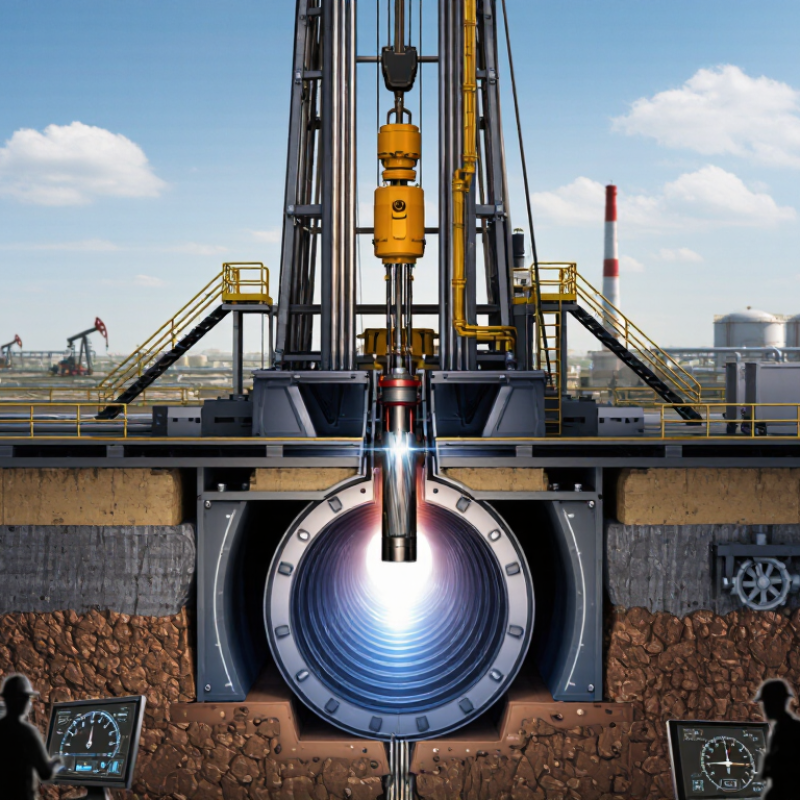
An oil perforator is a downhole tool used to create controlled openings through casing, cement, and surrounding rock. These openings connect the wellbore with the productive formation. The most common system is a Perforator Gun, which carries shaped charges arranged at selected intervals.

During a perforating operation, the tool is positioned at the planned depth using well records and logging data. When activated, the charges produce focused metal jets. These jets pass through the casing and cement, then form narrow channels in the reservoir rock. Fluids can move through these channels and enter the wellbore. The result depends on rock strength, pressure, casing condition, and perforation design.

In practical field work, depth accuracy matters greatly. A small positioning error can leave part of the target zone untouched. Engineers also check charge orientation, hole size, penetration, and well pressure before approval. It is not magic. A carefully designed gun can still perform poorly if cement bonding is weak or formation data is incomplete. That is why qualified crews use verified procedures, inspection records, and recognized safety standards. I have found that clear pre-job communication often prevents more problems than complicated equipment. The design should be reviewed honestly, because real wells rarely match the model perfectly.

Key Roles of Perforators in Oil Well Completion

Why Choose an Oil Perforator for Oil Drilling?

Perforators control how a completed well connects with the reservoir. Shaped charges pierce casing, cement, and formation rock. Their tunnels create flow paths for oil and gas. The result depends on shot density, phasing, tunnel depth, and formation strength. It is not simply a matter of making more holes.

The IEA’s Oil 2024 report projects global oil demand to reach 105.4 million barrels per day by 2030. Efficient completions will therefore remain important, especially in mature fields. API RP 19B requires perforation testing for penetration depth, entrance-hole size, and tunnel characteristics. These measurements help engineers compare designs before deployment. A poor perforation pattern can leave productive rock isolated. That mistake may appear only during pressure testing.

Perforators also support selective completion strategies. Engineers can target intervals with stronger logs and avoid weak zones. In high-pressure wells, controlled firing reduces unnecessary formation damage. In horizontal wells, phasing can improve contact around the casing. SPE completion studies frequently link perforation geometry with lower completion skin and better early inflow, although results vary by reservoir. That limitation matters. A laboratory tunnel may look excellent, yet field debris, cement quality, or stress changes can reduce performance. Careful gun placement, clean casing, and post-job pressure data remain essential. Small details decide the outcome.

How Oil Perforators Improve Reservoir Access

Oil perforators improve reservoir access by creating controlled channels through casing, cement, and formation rock. Their value appears at the well face, where a few millimeters can separate connected pores from sealed steel. Proper shot density and phasing expose more productive intervals. Poor placement can leave oil behind.

The U.S. Energy Information Administration’s Drilling Productivity Report shows how quickly mature shale wells lose output after their early peak. This decline makes efficient reservoir contact increasingly important. In the Oil Gas sector, engineers therefore match perforation depth with logs, stress data, and completion plans. API RP 19B also emphasizes testing perforation tunnels, entrance-hole size, and penetration performance. These details influence pressure drop and fluid flow.

Field experience suggests that selective perforating can reduce unwanted water entry and improve stimulation placement. The result is not always dramatic. Formation damage, weak cement, or inaccurate depth control can erase the expected gain. That is the uncomfortable part. A perforator cannot repair poor geological decisions. Still, when designed carefully, it gives operators a clearer path into layered reservoirs, especially where natural fractures or thin pay zones demand precise access. Small changes matter.

Main Types of Oil Perforators and Their Uses

Choosing an oil perforator begins with the well’s completion design, pressure profile, and target interval. The main types are wireline-conveyed guns, tubing-conveyed perforating systems, and through-tubing guns. Wireline guns suit accessible wells and provide fast depth control. They work well when the completion allows repeated runs. Tubing-conveyed systems handle deeper or highly deviated wells. They can perforate during a planned completion operation, reducing separate intervention time. Through-tubing guns pass through existing tubing. They are useful for selective recompletion, but their smaller diameter may limit charge size and penetration.

Shaped-charge perforators create focused jets through casing and cement. Their performance depends on standoff, casing strength, cement quality, and shot density. API RP 19B provides standardized procedures for evaluating perforator performance, including penetration and entrance-hole measurements. Field engineers still need site-specific validation. The U.S. Energy Information Administration reported average U.S. crude production of about 12.9 million barrels per day in 2023, showing why reliable completion and intervention tools remain important. The International Energy Agency’s Oil 2024 report projects global demand to rise by roughly 3.2 million barrels per day between 2023 and 2030. That outlook increases pressure to recover more from existing wells. In practice, the “best” perforator is not always the most powerful. A carefully aligned, lower-density design may outperform an aggressive tool in weak cement. Small planning errors remain expensive.

Factors to Consider When Choosing an Oil Perforator

Why Choose an Oil Perforator for Oil Drilling?

Factors to Consider When Choosing an Oil Perforator

Choosing an oil perforator starts with the well, not the equipment catalog. A field engineer should review casing size, wall thickness, cement quality, pressure, and temperature. These details shape the tool’s safe operating range. A perforator must create clean channels through casing and cement while reaching the intended formation. Poor alignment can reduce inflow and leave damaged zones behind.

Shot density and phasing also deserve close attention. A tight pattern may improve reservoir access, but it can weaken casing or increase unwanted communication. Penetration depth should match the formation and completion plan. Conveyance matters too. Wireline, tubing, and other methods behave differently in deviated wells. I have seen small planning gaps create costly delays. The tool was suitable, but the selected deployment method was not.

Quality control should include inspection records, pressure ratings, firing reliability, and compatibility with downhole conditions. Ask for clear test data, not vague performance claims. Recent Oil News may highlight new perforating designs, yet field evidence remains more valuable than publicity. No selection is perfect. Rock properties can vary within a few meters. Engineers should compare logs, core data, and previous well results before approval. A controlled review with drilling, completion, and safety teams can expose risks early. That step may feel slow. It often prevents a much longer problem later.

Why Choose an Oil Perforator for Oil Drilling?

Factors such as shot density, reservoir inflow requirements, casing design, formation strength, and cleanup performance should be evaluated when selecting an oil perforator.

The chart shows commonly used cased-hole perforation shot-density options, expressed as shots per foot. Lower densities may help limit formation damage and debris, while higher densities can increase reservoir contact and inflow distribution. The final choice should also consider casing thickness, charge penetration, phasing, pressure conditions, and formation properties.

Safety, Efficiency, and Cost Benefits of Oil Perforation

Why Choose an Oil Perforator for Oil Drilling?

An oil perforator creates controlled openings between the wellbore and the formation. This connection allows hydrocarbons to enter the casing more effectively. In field operations, safety begins before the tool reaches the well. Engineers review pressure data, casing condition, depth, and formation behavior. Trained crews also inspect charges, cables, and pressure-control equipment. Small oversights can become serious problems underground. Clear procedures matter.

Efficiency comes from accurate placement and reliable energy transfer. A properly selected perforator can reduce unnecessary formation damage and improve initial flow performance. Real-time depth checks help crews confirm the planned interval. The result may be fewer correction runs, less equipment use, and shorter service time. According to technical discussions across World Oil, perforation quality remains closely linked to completion performance. Still, “more holes” does not always mean better production. That assumption needs checking.

Cost benefits appear through the entire project, not only the perforation stage. Fewer repeat operations can lower labor, transport, and rig-related expenses. Better placement may also support more predictable stimulation and evaluation work. However, savings depend on geology, well pressure, tool design, and crew experience. A low-cost choice can become expensive after a failed run. I have seen planning look efficient on paper, yet field conditions changed the schedule within hours. Careful risk reviews and honest post-job records make the next decision stronger.

Why Choose an Oil Perforator for Oil Drilling? - Safety, Efficiency, and Cost Benefits of Oil Perforation

Evaluation Dimension Typical Perforation Data Safety Benefit Efficiency Benefit Cost Consideration
Shot Density Common gun designs use approximately 4–16 shots per foot (SPF), depending on formation strength and completion objectives. Allows the perforation program to balance inflow requirements with control of excessive formation damage or sand production. Multiple entry points can improve reservoir connectivity without requiring additional drilling. The optimum shot density can reduce unnecessary explosive loading and avoid over-designed completion hardware.
Phasing Typical phasing options include 0°, 60°, 90°, and 120°, selected according to casing, stress direction, and completion design. Strategic orientation can help distribute flow and reduce the risk of concentrated casing or formation loading. Directional control improves access to the productive interval and supports more uniform inflow. Correct phasing may reduce the need for remedial stimulation caused by uneven entry distribution.
Perforation Tunnel Length A shaped-charge perforation commonly creates a penetration tunnel measured in inches; actual length depends on charge design, casing, cement, and formation properties. Proper charge selection helps avoid excessive damage to casing, cement, or nearby completion components. Extending beyond the damaged zone can improve the connection between the wellbore and the reservoir. A suitable charge minimizes the likelihood of costly reperforation or corrective work.
Deployment Method Wireline, tubing-conveyed, and coiled-tubing-conveyed perforating are established deployment methods. The method can be matched to pressure, deviation, depth, and well-control requirements. Wireline is often efficient in accessible wells, while tubing or coiled tubing can support challenging pressure and deviation conditions. Selecting the correct conveyance method can reduce rig time, additional trips, and equipment mobilization.
Well-Control Compatibility Perforating may be conducted in overbalanced, underbalanced, or managed-pressure conditions, subject to the approved well program. Barrier verification, pressure testing, safe arming procedures, and controlled firing are essential before operation. A properly engineered pressure program can reduce post-perforation cleanup and improve initial flow response. Effective planning lowers the probability of nonproductive time, emergency intervention, and unplanned well-control work.
Selective Interval Access Perforating guns can be configured for selected zones and interval lengths, including staged or limited-entry designs. Selective access helps isolate water-bearing, unstable, or otherwise undesirable intervals. Only the planned pay zones are opened, supporting better production allocation and reservoir control. Avoiding unwanted intervals can reduce water-handling, workover, and zonal-isolation expenses.
Operational Speed A single run can perforate one or more designed intervals, subject to tool length, well depth, and operating limits. Fewer interventions can reduce personnel exposure to pressure-control equipment and explosive-handling activities. Perforation provides direct reservoir access without drilling a new lateral or replacing the production casing. Shorter operation time generally reduces rig, crew, equipment, and standby costs.
Quality and Verification Performance is evaluated through charge testing, gun inspection, depth correlation, pressure data, production logging, and post-job review. Documented inspection and verification reduce the risk of misruns, incorrect depth placement, and premature firing. Accurate depth control and reliable firing improve the chance of achieving the planned completion result on the first attempt. Better quality control reduces the likelihood of costly repeat runs, fishing operations, and remedial stimulation.

Note: The ranges and practices shown are typical industry planning values. Final perforator selection should be based on well depth, pressure, temperature, casing and cement design, formation properties, completion objectives, and the approved well-control program.

Big Hole Shaped Charges from China: Factory Solutions for Better Oil Penetration and Flow Efficiency

Big Hole Shaped Charges from China: Factory Solutions for Better Oil Penetration and Flow Efficiency

Big Hole Shaped Charges manufactured by experienced Chinese factories are designed to create larger perforation apertures while maintaining reliable penetration depth. This design supports more effective communication between the wellbore and the reservoir, making it suitable for low-permeability, sanding, and heavy oil formations. By improving the opening size and distribution of perforations, the product helps reduce flow resistance and supports more consistent production performance.

Factory-based manufacturing also allows the shaped charge to be adapted to different completion requirements, including formation conditions, casing specifications, and desired penetration profiles. Carefully selected energy configurations and quality-controlled components help deliver stable results while limiting unnecessary damage to the surrounding formation. With proper engineering, testing, transportation, and field handling in accordance with applicable safety regulations, this solution can improve oil flow efficiency, reduce pressure loss, and support higher well productivity. Its practical adaptability makes it a suitable option for operators seeking dependable perforation performance from a qualified China-based supplier.

FAQS

What is an oil perforator?

An oil perforator is a downhole tool that creates controlled openings in casing, cement, and reservoir rock. These openings connect the wellbore with the productive formation. It is not magic.

How does an oil perforator work?

The tool carries shaped charges at selected intervals. When activated, focused metal jets pass through casing and cement. They then form narrow channels inside the surrounding rock.

Why is perforation depth important?

Correct depth helps the openings reach the intended reservoir layer. A small positioning error can leave part of the target zone untouched. Precision matters.

What factors affect perforation performance?

Rock strength, formation pressure, casing condition, and charge design all influence results. Cement bonding also matters. Weak bonding can reduce effective flow paths.

How do perforations improve reservoir access?

Perforations expose productive intervals behind the casing. Proper shot spacing and direction can connect more reservoir pores with the wellbore. Poor placement may leave recoverable fluids behind.

Can selective perforating control unwanted water entry?

Selective perforating may reduce water entry by targeting chosen intervals. It can also improve stimulation placement. The result is not always dramatic.

What information helps engineers plan perforation work?

Engineers review well records, logging data, stress information, and completion plans. They also check planned depth, hole size, penetration, and pressure. Incomplete data can mislead the design.

What safety and quality checks are needed?

Qualified crews should follow verified procedures and inspect the tool before use. They should confirm charge orientation, depth control, and well pressure. Clear communication prevents many problems.

Can an oil perforator fix poor geological decisions?

No, it cannot repair inaccurate formation models or damaged rock. Even a carefully designed tool may underperform. Real wells often differ from predictions.

Conclusion

An Oil Perforator is a specialized tool used to create controlled openings in well casing and surrounding cement, allowing hydrocarbons to flow from the reservoir into the wellbore. During well completion, it helps connect selected production zones, improve communication with the reservoir, and support more effective stimulation and flow management. By placing perforations accurately, operators can access productive intervals while reducing unnecessary contact with less desirable formations.

Different perforator designs and operating methods are suited to various well conditions, casing sizes, formation strengths, and completion plans. When choosing an Oil Perforator, key considerations include perforation depth and size, reliability, compatibility with downhole equipment, operational control, and site safety requirements. A suitable system can improve reservoir access, increase completion efficiency, reduce intervention time, and help control overall project costs. Careful planning, equipment inspection, and responsible operating procedures are essential for achieving consistent results throughout the perforation process.
Isabella

Isabella

Isabella is a highly skilled marketing professional with a deep expertise in the oil and gas industry, particularly in downhole perforating systems. With a strong academic background and a keen interest in technological advancements, she plays a pivotal role in promoting her company's innovative......
Previous 2026 Best Mechanical Firing Head Types for Global Buyers