+86-15829394411
Leave Your Message
-
Contact WhatsApp
-
 Contact Phone
-
 Contact Email
Picking the right Mechanical Firing Head supplier in China isn’t just about comparing prices—it’s really about using some practical engineering judgment. A trustworthy supplier should show consistent machining quality, accurate dimensions, reliable insulation, and full material traceability. These little details actually matter a lot, especially when the firing head is working near heat, vibration, pressure, or undergoing repeated ignition cycles. Forget a small defect, and it might turn into a costly failure.
Daniel Mercer, an industrial ignition engineer with plenty of experience in burner parts, points out, “A firing head earns trust by how well it performs repeatedly, not just how shiny and perfect it looks in a brochure.” This is a good rule of thumb when you’re checking out Chinese manufacturers. Ask for their inspection records, product drawings, pressure test results, and proof of quality checks. An ISO 9001 certification can help give you confidence, but don’t rely on it alone—make sure to verify things independently. And don’t skip on requesting samples—you should examine them closely.
The best suppliers typically offer options for technical customization, quick responses, and consistent production capacity. They’ll also be able to explain why they choose materials like specific stainless steel grades, ceramic insulation, electrodes, connectors, and protective coatings. Clear, straightforward answers show they really know their stuff. On the flip side, vague promises? Not so much. A solid factory might also provide OEM support, batch traceability, detailed dimensional reports, and packaging that protects the product during shipping.
Of course, no supplier is perfect—product pages can sometimes hide issues, and testing just one sample might not reflect every batch’s quality. That’s why it’s smart to compare performance data, check out their manufacturing process, and set clear standards for acceptance before placing an order. China has plenty of capable Mechanical Firing Head manufacturers, but the “best” choice really depends on your specific application, operating conditions, documentation needs, and support after the sale. So don’t just look at the catalog; trust that reliability is built step by step, often behind the scenes.
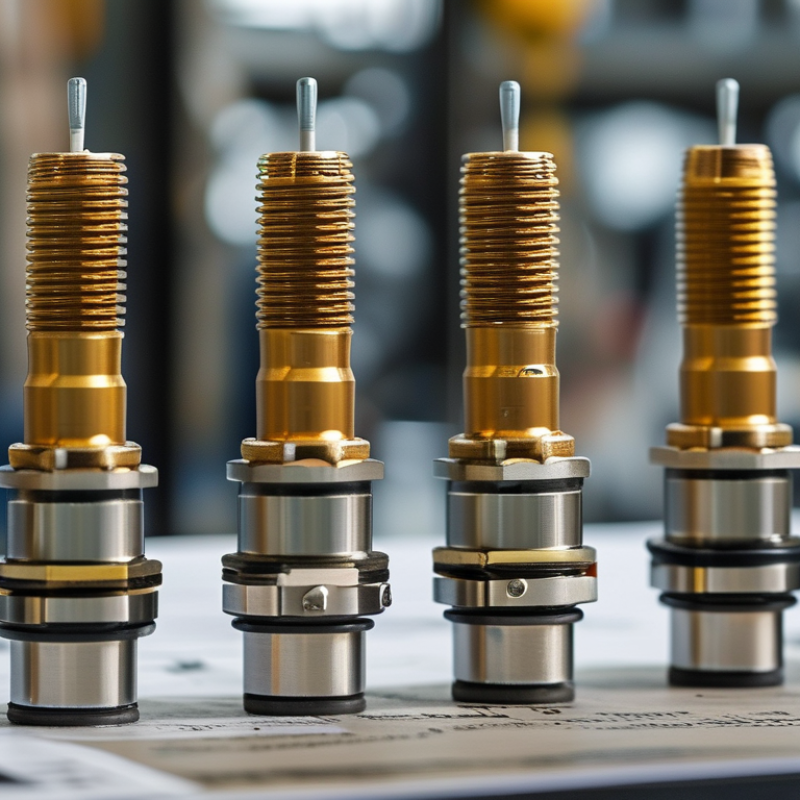
A Mechanical Firing Head is a downhole tool that initiates a controlled completion operation through mechanical force, pressure, or tool movement. It is used in well intervention systems where timing, depth, and confirmation matter. Unlike electronic systems, it usually relies on engineered shear elements, impact mechanisms, and safety interlocks. The tool must remain inactive during running, then respond only under defined operating conditions. In the field, technicians inspect threads, seals, mandrels, and movement indicators before deployment. A small damaged seal can become a serious reliability problem.
Industry guidance supports this cautious approach. API Spec 11D1 and ISO 14310 classify downhole completion equipment by performance and qualification requirements. IOGP’s Safety Performance Indicators report also tracks high-potential events and process-safety risks across oil and gas operations. These reports do not make a Mechanical Firing Head safe by itself. Design verification, documented testing, and trained handling still decide performance. That point is easy to underestimate.
Tips: Check the tool’s pressure and temperature ratings against the well program. Confirm compatibility with the work string and completion assembly. Use traceable inspection records for every critical part. Ask for qualification evidence, not only a product brochure. Field experience shows that unclear drawings and rushed checks often create avoidable uncertainty. One more thought: no supplier should promise perfect reliability. A dependable supplier explains limits, failure modes, and inspection intervals clearly.
A mechanical firing head is a downhole initiation device used to activate a perforating or explosive tool string through a controlled mechanical action. The following table summarizes its function, operating characteristics, and key selection criteria without using company or brand information.
| Data Dimension | Typical Technical Information | Practical Importance |
|---|---|---|
| Product Definition | A downhole tool that mechanically initiates a firing sequence for a perforating gun or other well-intervention device. | It provides a controlled connection between the deployment operation and the downhole firing mechanism. |
| Primary Function | Transfers a designed mechanical input into an initiating action while keeping the tool safe during running and positioning. | The head must prevent unintended activation during transportation, make-up, running in hole, and routine handling. |
| Activation Principle | Activation may use an impact, axial movement, weight-set action, or another mechanically controlled sequence, depending on the tool design. | The required activation method must match the conveyance system, well conditions, and approved operating procedure. |
| Common Applications | Tubing-conveyed perforating, selected well-completion operations, and other downhole systems requiring mechanical initiation. | Application compatibility should be confirmed for the complete tool string rather than for the firing head alone. |
| Deployment Method | Usually installed as part of a downhole assembly conveyed on tubing, work string, or another approved deployment system. | The deployment method determines how the mechanical input is delivered and how the assembly is positioned. |
| Mechanical Input | The required input can include a specified axial force, movement, impact, or sequence of mechanical actions. Exact values are design-specific. | Input requirements must be verified against available surface equipment and the expected friction, deviation, and load conditions in the well. |
| Pressure Rating | Designed for the pressure environment specified for the particular downhole tool string; there is no universal pressure rating. | The pressure rating must meet or exceed the planned differential pressure, test pressure, and well-control requirements. |
| Temperature Rating | Temperature capability depends on the housing material, seals, lubricants, energetic components, and qualification procedure. | The selected rating must cover the expected static temperature and any temperature increase during well operations. |
| Size and Geometry | Outside diameter, length, fishing profile, and connection dimensions are selected to fit the casing, tubing, and perforating-gun assembly. | Dimensional compatibility helps prevent restrictions, excessive clearance, tool damage, and difficulties during retrieval. |
| Connection Type | Connections may include threaded, flanged, or dedicated tool-string interfaces, depending on the assembly design. | Thread form, metallurgy, torque requirements, seal configuration, and make-up procedures must be checked before installation. |
| Housing Materials | Common construction uses high-strength alloy steel or other qualified materials selected for pressure, impact, corrosion, and temperature resistance. | Material selection affects structural integrity, service life, sour-service suitability, and resistance to downhole fluids. |
| Well-Fluid Compatibility | The tool should be evaluated for compatibility with formation fluids, completion brines, drilling fluids, hydrocarbons, hydrogen sulfide, and carbon dioxide where applicable. | Fluid compatibility reduces the risk of corrosion, seal degradation, swelling, galling, and unreliable mechanical movement. |
| Safety Features | Typical safety concepts include run-in-hole safeguards, controlled arming, mechanical barriers, transport protection, and defined handling procedures. | A safe design separates transportation and deployment conditions from the intentional firing condition as far as practicable. |
| Compatibility with Perforating Guns | The firing head must match the gun type, initiation system, pressure balance arrangement, connection dimensions, and approved firing sequence. | Incompatible initiation interfaces can cause misfires, incomplete activation, tool damage, or unacceptable operational risk. |
| Pressure-Balance Arrangement | Some designs use pressure-balanced or pressure-isolated internal sections to protect sensitive components from the wellbore environment. | Pressure management can improve reliability when the tool is exposed to high differential pressure or long downhole residence times. |
| Inspection Requirements | Inspection commonly includes visual examination, dimensional checks, thread inspection, seal inspection, documentation review, and verification of service history. | Inspection helps identify impact damage, corrosion, thread deformation, contamination, and parts that have exceeded their approved service limits. |
| Qualification Testing | Qualification may include pressure testing, temperature exposure, mechanical cycling, impact or load testing, environmental testing, and functional verification. | Testing demonstrates that the design can perform within its specified operating envelope before field deployment. |
| Reliability Factors | Reliability depends on correct assembly, clean interfaces, accurate make-up torque, proper storage, suitable well conditions, and adherence to the firing procedure. | Even a robust mechanical design can fail if the tool is contaminated, incorrectly assembled, improperly stored, or operated outside its limits. |
| Supplier Evaluation Criteria | Important criteria include documented specifications, traceable materials, testing records, inspection procedures, technical support, delivery consistency, and after-sales service. | A technically suitable supplier should provide verifiable documentation rather than relying only on general product descriptions. |
| Recommended Selection Process | Define well depth, casing and tubing dimensions, pressure, temperature, fluid type, conveyance method, activation procedure, gun interface, and regulatory requirements before selection. | A complete operating profile allows the firing head to be selected as part of a safe and compatible system. |
Important Pressure, temperature, dimensions, activation loads, connection details, and operating procedures vary by tool design and application. Always verify the latest technical drawings, qualification records, compatibility data, and approved field procedures before use.
China’s factory-direct firing head systems are engineered for controlled, professional downhole applications involving shaped-charge deployment through tubing, drill pipe, coiled tubing, or slickline. Designed for dependable activation and consistent performance, these systems support perforating and well-intervention operations where precision, compatibility, and equipment integrity are essential. Each firing head can be selected according to the conveyance method, operating environment, and project requirements, helping operators maintain efficient workflows while reducing equipment-related uncertainty.
Working with an experienced Chinese manufacturer and supplier provides access to integrated production, quality control, and technical support. Factory-direct sourcing can improve communication, simplify customization, and help ensure that components meet demanding industrial specifications. Reliable materials, accurate manufacturing, and thorough inspection contribute to stable performance in challenging downhole conditions. For qualified contractors and energy-service providers, a professional firing-head supplier can offer application-focused solutions, documentation, and responsible guidance for safe handling, authorized use, installation, and maintenance in accordance with applicable laws, regulations, and site procedures.
It is a downhole tool that starts a controlled completion operation through pressure, movement, or mechanical force. It remains inactive while running. Defined conditions trigger its internal mechanism.
Pressure or tool movement pushes a piston along a designed path. A calibrated shear element then releases the mechanism. A mandrel, spring, and housing keep movement controlled.
Inspect threads, seals, mandrels, springs, shear elements, and movement indicators. Check for scratches, distortion, debris, or damaged surfaces. Small defects can create serious reliability problems.
Confirm the tool’s pressure and temperature ratings match the well program. Heat can change seal behavior. Pressure, vibration, and fluid exposure may also affect movement.
Request material certificates, batch traceability, pressure-test records, and calibrated inspection reports. Ask for qualification evidence, not only a product brochure. Documentation should identify each critical part.
They should verify thread condition, seal quality, assembly cleanliness, and work-string compatibility. Clear drawings help prevent fitting mistakes. Rushed checks create avoidable uncertainty.
Testing should record pressure stability, leakage results, cycle performance, and visual condition. Measurements need current calibration records. Informal demonstrations are not enough.
No. Certification supports quality management, but it does not remove field risks. Design review, controlled testing, trained handling, and site verification still matter.
Ask about pressure limits, temperature limits, compatibility, inspection intervals, and known failure modes. Request evidence of corrective actions. Perfect reliability is not a realistic promise.
A Mechanical Firing Head is a precision component designed to initiate controlled mechanical action in industrial equipment, often where reliable timing, force transmission, and operational stability are essential. This article explains its basic structure, working principles, and how internal mechanisms convert an applied trigger or movement into a dependable firing or activation response. It also reviews major types, including manually operated, spring-loaded, hydraulic-assisted, and electronically coordinated configurations, along with their use in manufacturing, testing, automation, and other industrial systems.
When evaluating suppliers in China, buyers should consider engineering capability, material selection, manufacturing accuracy, product consistency, testing procedures, customization support, and after-sales service. A dependable supplier should follow recognized quality-management practices, maintain traceable production records, and provide clear technical documentation. Selecting the right partner requires comparing specifications, certifications, inspection standards, production capacity, communication efficiency, and delivery reliability to ensure that the Mechanical Firing Head matches the equipment’s operating conditions and long-term performance requirements.