China's Top 10 TCP Perforating Gun Manufacturers for 2026 really highlight how quickly the industrial scene is evolving. Oilfield operators are now more than ever asking for safer, more reliable completion tools. And a TCP perforating gun isn’t just about punching shaped-charge tunnels anymore. It needs to arrive precisely built, handle rough treatment without a fuss, and perform consistently, whether it’s transported, stored, or deployed. Tiny details actually matter — things like thread quality, carrier strength, sealing design, and traceable inspection records can make a real difference in outcomes.
In this guide, we look at ten Chinese manufacturers that focus on tubing-conveyed perforating jobs. We’ve evaluated them based on their factory capabilities, engineering experience, how much they customize their products, quality control practices, whether they’re ready to export, and the support they offer. We put more weight on solid facts like certifications, datasheets, test procedures, and customer feedback rather than slick marketing claims. When some info is missing, we’ve honestly pointed out those gaps. Our goal isn’t to hype specific brands but to compare their true capabilities based on documented evidence. Of course, field conditions matter too—a gun that works great in one well might not be suitable for another, depending on size, shot density, pressure ratings, how it’s conveyed, or the formation goals. One size definitely doesn’t fit all.
Think of this ranking as a practical starting point, not a final answer—never a substitute for professional completion engineering advice. Always ask for material certificates, inspection reports, compatibility info, and clear handling guidelines before making a purchase or deploying equipment. Also, double-check regulations and operator specs first. Keep in mind, no ranking is perfect. Websites change, some info may be skewed, and success depends on the entire system, not just the tool itself. This review might have some imperfect judgments too. Still, doing your due diligence with careful comparisons can help minimize surprises and identify trustworthy Chinese partners for your projects in 2026.
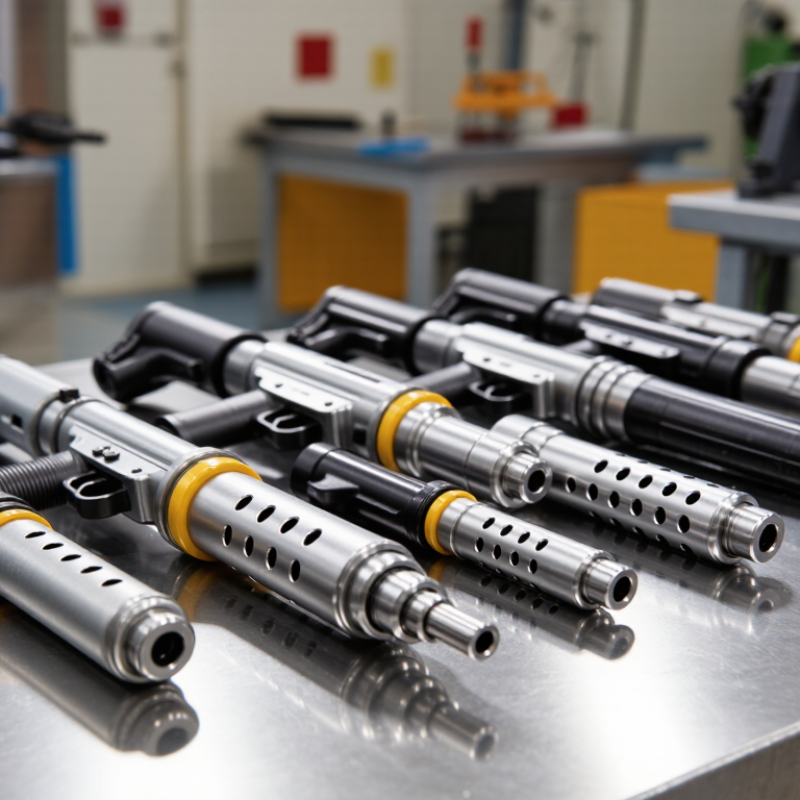
TCP perforating guns are downhole tools conveyed on production tubing before a well is completed. Their shaped charges pierce casing, cement, and formation rock to create controlled flow paths. In practical field work, engineers inspect charge density, pressure ratings, gun length, and placement depth together. A Tcp Gun System is not merely a firing device. It is a coordinated system involving tubing, conveyance equipment, firing controls, and well data.
In 2026, these systems matter because operators need more accurate reservoir access with fewer intervention cycles. A wellsite crew may handle long gun strings in limited space, where small alignment errors can affect performance. Reliable telemetry, clear depth correlation, and verified pressure barriers support safer decisions. Material selection also matters. High temperature, corrosive fluids, and narrow completion windows can expose weak components quickly. The best manufacturing evaluation should include test records, inspection methods, engineering support, and realistic operating limits, not only catalog specifications.
No design is perfect. Debris can restrict movement, and formation behavior may differ from laboratory predictions. I have seen planning become too confident when models hide uncertain cement quality or uneven rock stress. That deserves review. Manufacturers with strong technical documentation should explain failure modes, tolerance ranges, and maintenance requirements in plain language. They should also support traceability from raw materials to final inspection. In 2026, dependable TCP performance will rely on disciplined engineering, honest data, and equipment suited to the actual well rather than an idealized one.
Chinese TCP perforating gun manufacturers are evaluated through evidence, not catalog claims. Buyers should review factory test records, material certificates, pressure history, and field failure data. API RP 19B provides standardized perforating performance tests, including penetration and casing-hole measurements. These results help compare guns under controlled conditions. They do not fully represent every well.
The Tcp Firing Head requires special attention. Inspectors should check pressure ratings, firing reliability, shear-pin consistency, and temperature limits. IEA’s Oil 2024 report projects global oil demand near 105.4 million barrels per day by 2030. This outlook increases pressure for reliable completion equipment. However, demand growth does not excuse weak documentation. A cheaper tool may become expensive after one delayed intervention.
Tips: Request three years of traceable test records. Confirm calibration dates. Ask for independent inspection results. Review how the manufacturer handles nonconforming parts. A clean workshop matters, but process discipline matters more. Also, test communication between the firing head, tubing-conveyed string, and surface controls. Small interface errors can create large operational delays.
Evaluation should include engineering depth, manufacturing consistency, and after-sales response. Check whether technicians understand pressure cycling, shock loads, debris control, and retrieval planning. ISO and API references are useful, but certificates alone are not proof of field performance. A practical audit should include sample measurements and witnessed tests. Some suppliers still present ideal results only. That weakness deserves questioning, even when the paperwork looks complete.
China’s Top 10 TCP Perforating Gun Manufacturers for 2026 should be assessed through evidence, not advertising claims. The strongest manufacturers usually show practical experience with tubing-conveyed perforating systems in different well conditions. Their records may include temperature ratings, pressure testing, completion compatibility, and documented field performance. Clear drawings matter too. They help engineers check gun diameter, connection type, firing reliability, and deployment limits before a job begins.
A dependable manufacturer should maintain traceable materials and controlled assembly procedures. Look for inspection reports, batch records, dimensional checks, and non-destructive testing where appropriate. Technical teams should explain how their systems perform in deviated wells, high-pressure environments, and long completion intervals. Response quality is also revealing. Specific answers are better than polished promises. Manufacturing capacity, spare-part support, and export documentation deserve equal attention.
The ranking still needs caution. A supplier may appear strong on paper but lack recent field evidence. Another may offer excellent engineering but inconsistent delivery. That is not a minor detail. Buyers should compare independent test results, customer references, factory audits, and after-sales response times. Safety procedures must follow applicable laws and site controls. Some published specifications may also change during 2026, so verification remains necessary. The best choice is rarely based on price alone. Often, the quietest technical discussion reveals the most.
Modern TCP perforating systems combine shaped-charge design, pressure control, telemetry, and accurate depth correlation. The International Energy Agency’s Oil 2024 report projects global oil demand near 105.4 million barrels per day by 2030. This pressure for efficient production increases the value of reliable completion technology.
Shaped charges remain central. Their liners form high-velocity jets that penetrate casing, cement, and formation rock. Engineers now use computational modeling to adjust charge geometry, spacing, and phasing for different rock strengths. Perforation testing under API RP 19B helps compare entry-hole size, penetration, and debris performance. Small design changes matter.
Real-time pressure and temperature sensors improve operational control during TCP deployment. Fiber-optic or electronic telemetry can identify abnormal pressure behavior before it becomes a costly problem. Centralizers, depth correlation, and calibrated conveyance systems also reduce placement errors. SPE completion studies frequently emphasize reservoir-specific modeling rather than universal gun layouts. That approach is more credible.
Yet the technology is not perfect. Sensor drift, incomplete cement bonding, and uncertain stress data can weaken otherwise careful designs. Field teams still need cross-checks between logs, simulations, and measured pressure responses. A clean model may look convincing. Reality is less cooperative. Reliable systems therefore depend on tested components, qualified procedures, and engineers willing to question their first interpretation.
When comparing China’s TCP suppliers, catalogue energy is not enough. API Spec 19B provides standardized test methods for perforating performance, including penetration and debris evaluation. Ask for current test reports, not only marketing curves. Confirm shot density, phasing, charge size, gun diameter, pressure rating, and temperature limits. Check lot traceability for charges, carriers, detonators, and seals. ISO 9001 certification helps, but it cannot replace witnessed testing or field evidence. Small details matter.
The IEA Oil 2024 report projects global oil demand to increase by 5.4 million barrels per day between 2023 and 2030, reaching 105.4 million barrels per day. This outlook increases pressure on completion efficiency and predictable production results. A capable Perforating Gun manufacturer should offer simulation support, configuration changes, and documented acceptance criteria. Field support deserves equal attention. Request response-time records, remote troubleshooting procedures, spare-part availability, and post-job reports with pressure data and recovered debris observations. Ask whether engineers can join a pre-job review at the wellsite. That is where promises become measurable.
Customization is not automatically quality. One weakness remains common: buyers compare price before validating compatibility with tubing, fluids, and conveyance limits. I would score suppliers against identical technical requirements, then audit two recent jobs. A spreadsheet can still lie.
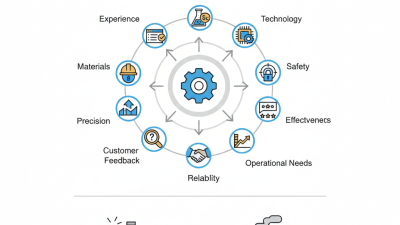
For a practical supplier comparison, product qualification and operational reliability should carry the greatest weight, followed by customization capability and field support. The chart presents a transparent evaluation framework without publishing company-specific scores or brand data.
China Top 10 TCP Perforating Gun Manufacturers 2026
Safety Standards and Purchasing Considerations for Global Buyers
For global buyers, selecting a Chinese TCP supplier requires more than comparing catalog prices. A Modular Perforating Gun should arrive with clear pressure, temperature, and material ratings. Ask for batch traceability, inspection records, and controlled assembly procedures. Small details matter. Confirm how each component is identified before it reaches the wellsite. This reduces confusion during loading, transport, and deployment.
Safety evidence should match the operating environment, not just a sales folder. Request documented quality systems, product testing, calibration records, and conformity declarations where applicable. For hazardous locations, verify the equipment and handling process against regulations accepted in the destination country. Transport documents, storage instructions, and emergency procedures also deserve review. Do not rely on translated summaries alone. Have a qualified technical reviewer compare original records with the purchase specification.
Before signing, examine sample drawings, connection compatibility, pressure limits, and service support. A responsible supplier should explain acceptance criteria and report nonconforming parts openly. That answer is revealing. Ask about operator training, inspection intervals, and a realistic spare-parts plan. Field references can help, but they should be checked independently. Certificates may be current while factory discipline remains uneven. A site visit or remote audit can expose gaps early. Price matters, but controlled handling and reliable documentation protect people, schedules, and investment.
Comparative procurement-screening table using anonymous supplier profiles. Technical figures are representative market ranges or verification checkpoints rather than claims about any named company or brand. Buyers should confirm the latest drawings, certificates, pressure ratings, explosive approvals, and well-specific qualification records before purchase.
| Anonymous Supplier Profile | Common TCP Gun Configuration | Typical Gun OD Range | Typical Completion Compatibility | Typical Shot Density / Phasing | Pressure and Temperature Verification | Safety and Quality Evidence to Request | Key Purchasing Considerations | Global Buyer Risk Indicator |
|---|---|---|---|---|---|---|---|---|
| Profile 01 | Conventional hollow-carrier TCP system with threaded gun sections and bottom firing head. | 2-7/8 to 5 in nominal OD; confirm drift and connection dimensions. | Production tubing, packer, firing head, tandem-gun and selective-zone completion designs. | 4 to 12 shots/ft; 60°, 90° and 120° phasing commonly available. | Request hydrostatic pressure test records, temperature rating, burst/collapse calculations and API 19B performance documentation where applicable. | ISO 9001 quality system; documented explosive-handling procedures; material certificates; traceability; nonconformance records; approved transport documentation. | Check gun OD against casing drift, make-up torque, thread form, firing-head interface, shipping classification and spare-part availability. | Verify before award |
| Profile 02 | High-shot-density carrier intended for long intervals and controlled multi-gun string deployment. | 3-1/8 to 5-1/2 in nominal OD; actual clearance depends on carrier and charge geometry. | Vertical, deviated and selected horizontal wells with compatible tubing and completion hardware. | 8 to 16 shots/ft; 45°, 60°, 90° and 120° phasing subject to charge selection. | Obtain system-level ratings, not only component ratings; request temperature exposure results and pressure-cycle evidence. | API 19B Section 1 or equivalent perforator-performance test evidence; ISO 9001; calibrated inspection equipment; lot-level charge traceability. | Compare entry-hole size, penetration, debris generation, gun recovery plan, interval length and cumulative explosive-load restrictions. | Technical review required |
| Profile 03 | Small-clearance TCP gun for restricted casing or tubing-annulus geometry. | 2-7/8 to 3-3/8 in nominal OD; verify minimum internal diameter and centralization. | Small-casing completions, selective perforating and lower-volume production zones. | 4 to 10 shots/ft; phasing selected to balance tunnel distribution and carrier strength. | Confirm pressure rating after perforator loading, thread make-up and temperature soak; request dimensional inspection reports. | ISO 9001; approved design drawings; incoming-material inspection; firing-head compatibility matrix; documented arming and red-zone controls. | Prioritize drift clearance, bending limits, conveyance reliability, gun-to-gun alignment and safe redress procedures. | Moderate risk if qualified |
| Profile 04 | High-temperature TCP assembly for demanding thermal wells and extended downhole exposure. | 3-1/8 to 5-1/2 in nominal OD; temperature class must be confirmed for the complete assembly. | Deep, high-temperature completions with qualified firing systems and compatible elastomers. | 4 to 12 shots/ft; phasing and charge type depend on formation objective. | Request independent temperature qualification, thermal aging data, pressure-temperature envelope and firing reliability results. | ISO 9001; controlled explosive storage; temperature qualification reports; seal and material compatibility data; documented engineering change control. | Review thermal degradation, soak duration, transport temperature limits, firing delay tolerance and contingency procedures. | High verification priority |
| Profile 05 | Tandem or modular TCP gun system for long perforated intervals using multiple connected sections. | 3-1/8 to 5 in nominal OD; confirm maximum string length and handling limits. | Long-zone completions, staged perforating and multi-section gun strings. | 4 to 16 shots/ft; phasing may be consistent or staggered between sections. | Require connection-load analysis, pressure testing of each module, string buckling review and full-system firing documentation. | ISO 9001; module serial traceability; connection inspection; assembly traveler; documented redress and final inspection records. | Assess cumulative explosive load, transport permits, lifting fixtures, assembly time, depth correlation and misfire contingency. | Logistics-sensitive |
| Profile 06 | Selective-zone TCP package with multiple firing heads or independently addressable gun sections. | 3-1/8 to 5-1/2 in nominal OD; verify selective-tool dimensions and control interfaces. | Completions requiring interval isolation, staged stimulation or controlled zone access. | 4 to 12 shots/ft; phasing selected by reservoir and completion program. | Request firing-sequence validation, pressure integrity of isolation interfaces and documented compatibility with completion control systems. | ISO 9001; software or control-interface validation where applicable; functional test records; assembly identification and configuration control. | Confirm sequence logic, depth correlation, isolation reliability, contingency for partial activation and post-job diagnostics. | Configuration risk |
| Profile 07 | Premium-machined carrier system focused on dimensional consistency and reduced post-job debris. | 3-1/8 to 5 in nominal OD; confirm carrier straightness, eccentricity and casing clearance. | Standard and high-integrity completions where debris control and predictable perforation are priorities. | 4 to 12 shots/ft; 60° and 90° phasing commonly evaluated for inflow distribution. | Request dimensional capability data, pressure tests, material grade certificates and independent perforation-performance results. | ISO 9001; material traceability; non-destructive examination where specified; calibrated gauges; documented cleaning and inspection process. | Compare total landed cost, manufacturing tolerance, debris-management requirements, redressability and compatibility with downhole gauges. | Lower manufacturing risk when documented |
| Profile 08 | Standard TCP gun package optimized for routine oil and gas completion programs. | 2-7/8 to 5 in nominal OD; select based on casing weight, drift and completion schematic. | Routine production, appraisal and workover applications with conventional tubing-conveyed deployment. | 4 to 12 shots/ft; common phasing options include 60°, 90° and 120°. | Confirm rated working pressure, test pressure, maximum temperature and test medium for every supplied configuration. | ISO 9001; batch certificates; pressure-test chart; explosive transport compliance; operator training and job-safety documentation. | Evaluate lead time, minimum order quantity, documentation quality, field service coverage and replacement-component availability. | Suitable for standard tenders |
| Profile 09 | Custom-engineered TCP assembly for non-standard casing, completion or perforation objectives. | Custom; commonly within 2-7/8 to 5-1/2 in nominal OD, subject to engineering approval. | Special completion geometries, unusual casing programs, high deviation or application-specific deployment constraints. | Project-specific; shot density and phasing require formation, casing and stimulation input. | Require design review, finite-element or equivalent mechanical assessment, prototype qualification and full-scale pressure testing. | ISO 9001; formal design review; change control; risk assessment; test plan; customer approval of drawings and acceptance criteria. | Define ownership of engineering changes, witness points, acceptance testing, schedule buffers, export controls and field-support responsibilities. | Highest engineering review |
| Profile 10 | Export-oriented TCP supply package with consolidated documentation and international logistics support. | 3-1/8 to 5 in nominal OD; final dimensions must match the destination well program. | International projects requiring coordinated packaging, customs documents and local operating procedures. | 4 to 12 shots/ft; phasing and charge selection based on the approved perforating program. | Request country-specific transport classification, pressure and temperature certificates, packing records and pre-shipment inspection evidence. | ISO 9001; dangerous-goods shipping compliance; SDS documentation; export-control screening; lot traceability; inspection release certificate. | Check import permits, customs codes, insurance, language of manuals, delivery terms, sanctions screening and local explosive regulations. | Regulatory verification required |
Recommended minimum tender package: approved well schematic, casing and tubing dimensions, drift data, target interval, required shot density and phasing, pressure-temperature envelope, deployment method, explosive transport requirements, applicable local regulations, inspection and testing plan, certificates of conformity, and documented acceptance criteria.
They combine shaped-charge design, pressure control, telemetry, and accurate depth correlation. Each part supports more predictable placement and performance.
Their liners create high-velocity jets through casing, cement, and formation rock. Engineers adjust geometry, spacing, and phasing for different rock strengths. Small changes matter.
Standardized testing compares entry-hole size, penetration, and debris behavior. Current test reports are more useful than attractive marketing curves.
They show changing downhole conditions during deployment. Telemetry may reveal abnormal pressure behavior before it becomes expensive. Sensors can drift, though.
Centralizers, depth correlation, and calibrated conveyance systems reduce placement errors. Teams should compare logs, simulations, and measured pressure responses.
Request pressure ratings, temperature limits, shot density, phasing, gun diameter, and material details. Also review batch traceability and inspection records.
No. Customization must match tubing, fluids, formation conditions, and conveyance limits. A tailored design can still fail without field validation.
Review handling instructions, transport documents, emergency procedures, calibration records, and conformity documents. Ask about training, spare parts, response times, and post-job reports.
Be cautious when suppliers provide outdated tests, unclear acceptance criteria, or incomplete component identification. Certificates may be current while factory discipline remains uneven.
They reveal whether documented procedures work in real conditions. A site visit helps expose gaps early. Still, references need independent checking.
This article presents a practical guide to the China Top 10 TCP Perforating Gun Manufacturers for 2026, explaining what TCP perforating guns are and why they remain important for efficient, controlled well completion. It outlines how manufacturers can be evaluated through engineering capability, manufacturing consistency, product reliability, customization options, testing procedures, technical documentation, and responsive field support. The discussion also highlights the role of modern technologies such as precision charge design, modular gun systems, advanced materials, improved deployment control, and data-based quality management.
For global buyers, the article provides a clear framework for comparing product quality, project compatibility, delivery capacity, after-sales service, and total operating value. It also emphasizes the importance of verified safety systems, international conformity, traceable components, professional training, risk assessment, and responsible handling throughout procurement and field operations. By combining technical performance with safety and support considerations, readers can make informed purchasing decisions and select solutions suited to their operational requirements.