+86-15829394411
Leave Your Message
-
Contact WhatsApp
-
 Contact Phone
-
 Contact Email
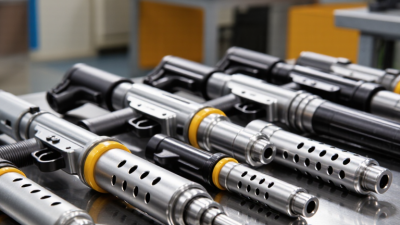
Picking the right Perforating Tools? Honestly, it can make or break the whole completion. Get it right, and you'll probably see a cleaner, more consistent tunnel—which can help with reservoir connection. Get it wrong, though, and you might end up with uneven entry holes, a ton of debris, or production that just doesn't perform the way it should. And really, it's not just about which brand name you recognize. Basically, engineers have to look at a whole mix of things here—formation strength, casing grade, well deviation, pressure limits, gun size, charge design, and how it's all going to be deployed.
Carl Montgomery, a perforating specialist, has a principle that’s worth holding onto: 'Perforating isn’t just about making holes. It’s about creating a controlled connection between the wellbore and the reservoir.' And honestly, that connection deserves some careful planning. A tool that works great in a vertical sandstone well might behave very differently in a high-temperature carbonate completion. The little details really matter—shot density, phasing, stand-off, penetration depth. Any one of them can change the outcome.
So, here's the deal: this guide gives you 10 practical tips for choosing the best perforating tools. It's not just theory—it looks at field experience, lab data, operational safety, and whether the tools play nice with completion equipment from established names like Halliburton, Baker Hughes, and SLB. And yeah, it also owns up to an uncomfortable reality: there's no perfect tool for every well. Selection models can miss stuff. Published performance data? Sometimes it just doesn't match what you'll see in local conditions. So, yeah—engineers shouldn't just take the technical evidence at face value. Cross-check it against offset-well results and what the actual service records show.
Don't get dazzled by shiny specs, either. Ask the harder questions: How does the tool hold up under pressure? Does it deploy reliably? And does the supplier come clean about where it falls short? Good decisions are the ones you can measure. But better ones? They stay open to being corrected.
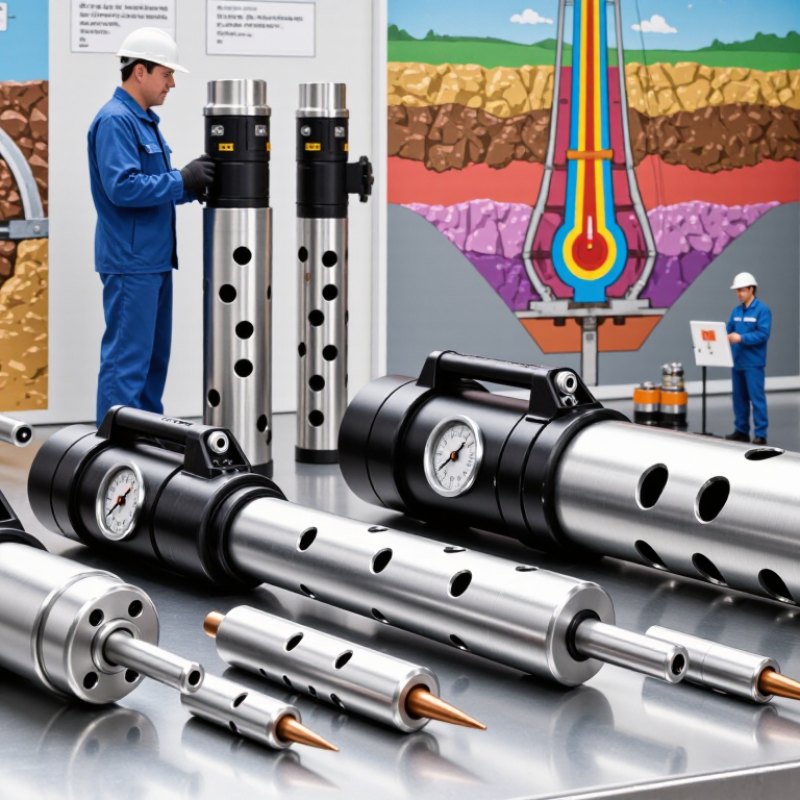
Choosing the best Oil Tools for perforating starts with API RP 19B, not a sales brochure. This recommended practice evaluates perforator performance under controlled conditions. Review entry-hole diameter, penetration depth, tunnel shape, debris, and repeatability. Do not confuse a laboratory result with guaranteed reservoir output. That assumption deserves challenge.
Ask for complete API RP 19B test records, including target material, pressure, temperature, charge orientation, and measurement methods. Compare identical conditions across suppliers. A 2024 U.S. Energy Information Administration report placed average crude production near 12.9 million barrels per day in 2023. Much of this supply depends on repeatable unconventional completions. Small variations in perforation geometry can influence near-wellbore flow and stimulation placement. The tool must match casing grade, cement strength, formation stress, and planned gun deployment.
Check ten practical details: test repeatability, shot density, phasing, penetration, hole size, debris control, pressure rating, temperature rating, deployment clearance, and field documentation. API RP 19B does not certify universal productivity. It provides a controlled comparison framework. SPE technical literature also shows that perforation effectiveness depends on stress, damage, and cleanup, not charge energy alone. Field evidence remains essential.
Look closely at the raw photographs. Measure the tunnel. Question incomplete reports. A clean target is not a shale formation. The best selection combines API RP 19B data, engineering judgment, and post-job review. Mistakes still happen. Reliable teams document them.
| No. | Selection Dimension | What to Evaluate | Recommended Verification Data | API RP 19B Performance Focus | Decision Rule |
|---|---|---|---|---|---|
| 1 | Confirm the completion objective | Define whether the primary objective is production, injection, stimulation, water control, or selective interval access. | Target interval, expected flow direction, reservoir pressure, formation type, completion design, and intervention limitations. | API RP 19B results should be matched to the intended downhole application rather than compared as isolated laboratory numbers. | Reject tools that cannot meet the completion objective under actual well conditions. |
| 2 | Check casing, tubing, and completion geometry | Verify that the tool can pass through, position within, and operate safely in the planned completion configuration. | Casing or tubing size, wall thickness, drift diameter, tool outside diameter, gun clearance, centralization, and orientation requirements. | Test results are meaningful only when the tool configuration and target conditions are clearly documented. | Select a configuration with verified mechanical clearance and documented test conditions. |
| 3 | Compare penetration depth | Assess whether the perforation tunnels can extend through the completion barrier and sufficiently into the formation. | Average penetration, individual shot distribution, test target description, standoff, and test pressure where reported. | Perforation penetration is a primary comparative performance measurement under the applicable API RP 19B procedure. | Use the measured value for the closest representative configuration, not a generic catalogue value. |
| 4 | Evaluate entrance-hole and tunnel quality | Look beyond penetration length and consider the size, consistency, and condition of the perforation entrance and tunnel. | Entrance-hole diameter, tunnel diameter where measured, deformation, crushed-zone observations, and shot-to-shot consistency. | API RP 19B reporting should identify the measured perforation characteristics and the test method used. | Prefer consistent openings that support the planned inflow or injection profile. |
| 5 | Choose suitable shot density | Select the number of perforations per unit length according to inflow requirements, rock properties, sand control, and interval isolation. | Shots per metre or shots per foot, phasing angle, interval length, expected productivity, and formation stability. | Shot density and phasing form part of the perforating-system configuration that must be reported with performance results. | Do not maximize shot density automatically; balance access with completion integrity. |
| 6 | Review phasing and shot orientation | Determine how perforations are distributed around the casing and whether orientation supports the completion and stimulation plan. | Phasing angle, gun orientation method, planned azimuth, deviation, centralization, and orientation tolerance. | API RP 19B comparisons should use the same phasing, orientation, and tool setup when possible. | Choose the phasing pattern that best supports coverage and avoids undesirable weak planes. |
| 7 | Account for pressure and temperature | Confirm that the perforating system is qualified for the maximum expected downhole pressure, temperature, and exposure duration. | Maximum operating temperature, pressure rating, differential pressure, soak time, explosive qualification, and safety limits. | Use API RP 19B performance data together with documented operating-condition qualifications; a target test alone does not establish every service limit. | Select only tools with qualification margins above the planned operating envelope. |
| 8 | Assess debris and completion damage | Consider charge debris, casing deformation, cement damage, and formation damage that may affect cleanup or long-term flow. | Debris quantity and type, casing deformation, cement response, cleanup requirement, and post-perforation restriction risk. | Request complete test observations and limitations; API RP 19B performance data should not be reduced to penetration alone. | Prefer the tool that achieves the required access with the lowest unacceptable damage risk. |
| 9 | Demand traceable test documentation | Make sure performance claims can be traced to a documented test configuration and a stated edition of the recommended practice. | API RP 19B edition, applicable test procedure, target material, casing and cement details, gun size, charge type, standoff, and raw measurements. | The test procedure, target, geometry, and reporting basis are essential for a valid comparison. | Reject unsupported “best performance” claims without comparable test evidence. |
| 10 | Compare total operational risk and value | Evaluate conveyance, deployment time, well control, compatibility, recovery requirements, logistics, and expected production benefit. | Run time, deployment method, contingency plan, intervention requirements, personnel exposure, estimated cost, and expected value. | API RP 19B provides performance evaluation guidance; operational and economic decisions require separate engineering assessment. | Choose the highest qualified performance-to-risk solution, not simply the highest individual test value. |
Technical note: API RP 19B is a recommended practice for evaluating perforators and reporting perforating performance. Reported values are configuration- and test-dependent; they should not be treated as universal acceptance limits or compared without confirming equivalent test conditions.
Self-cleaning perforating systems are emerging as a practical way to improve flow optimization in demanding oil and gas operations. According to the International Energy Agency’s *Oil 2024* outlook, global oil demand is expected to reach approximately 105.4 million barrels per day by 2030, increasing the importance of efficient production from existing wells. In this environment, perforation quality, tunnel conductivity, and near-wellbore cleanliness can directly influence completion performance and reservoir access.
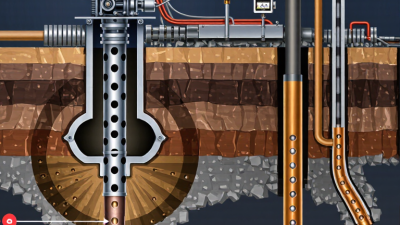
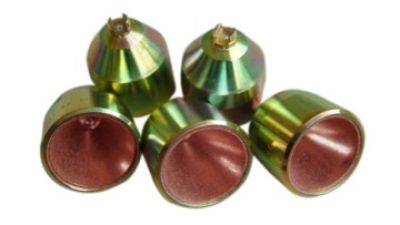
Developed by specialized China-based suppliers and factories, the system combines self-cleaning shaped charges, a high-pressure perforating gun, and dedicated downhole components. Its shaped charges use a reactive liner containing specialized energetic materials. During detonation, the liner generates an exothermic reaction that releases additional energy and raises pressure inside the perforation tunnel. The resulting high-velocity backflow helps remove loose debris, compacted formation material, and tunnel blockage that may restrict fluid movement.
By reducing perforation damage during the completion process, this design supports more consistent flow paths and can help bring tunnel conductivity closer to ideal conditions. API Recommended Practice 19B provides standardized methods for evaluating perforating-system performance, including penetration and productivity-related characteristics, making controlled testing essential when comparing equipment. For operators seeking smarter flow management, China’s manufacturing base offers configurable systems for different casing sizes, pressure conditions, and completion strategies.
Drift diameter shows the usable internal space more accurately than nominal casing size. A 5.5-inch casing may offer only about 4.8 inches of drift. A 4.5-inch gun may leave little radial clearance. Scale, debris, and casing wear can remove that space. Measure twice.
Confirm current drift records, casing weight, deviation, and centralizer clearance. Check the gun’s maximum outside diameter against actual casing clearance. Do not rely only on catalog dimensions. Field data may arrive late, and that can damage an otherwise neat plan.
Standoff is the distance between the charge and casing wall. A charge tested at three inches may perform differently at one inch. Penetration and tunnel diameter can change significantly. Small geometry errors matter. Very much.
Standardized tests help compare penetration, tunnel diameter, and repeatability. They use controlled target conditions. These results support selection but do not replace a field-specific model. Actual casing geometry still needs review.
A smaller gun may improve conveyance through a tight section. However, it can reduce charge capacity or alter shot coverage. Review the trade-off with a documented clearance and performance check. Smaller is not automatically better.
The rating should exceed the highest expected downhole pressure. Consider hydrostatic pressure, surge pressure, and sudden pressure changes. Matching the planned pressure alone is insufficient. Keep a clear safety margin.
Measured depth, fluid density, temperature, and pressure spikes can change the load. Longer intervals, heavier fluids, or revised firing sequences may also matter. Heat can reduce material strength. Recheck after design changes.
Request traceable pressure tests, material details, and equipment calibration dates. Confirm that ratings apply at the expected temperature. Inspect seals, threads, ports, and connections. Paperwork is not a substitute for evidence.
Follow an approved procedure with calibrated equipment. Inspect weak points before applying pressure. Record the calculations and reviewer names. People miss small details, even on familiar jobs. That deserves honest attention.
Selecting the right Perforating Tools requires a careful review of performance, compatibility, and downhole operating conditions. Begin by using API RP 19B performance standards to compare tool behavior and test results. Confirm that the gun diameter matches the casing size, then select charges that provide suitable penetration and entry-hole dimensions. Shot density, typically ranging from 4 to 12 shots per foot, should be chosen according to the formation and the level of reservoir access required. Phasing angles of 0°, 60°, or 90° can also influence coverage and flow distribution around the wellbore.
Before deployment, evaluate penetration depth, entry-hole size, and tunnel geometry in representative concrete or formation models. These factors help determine whether the perforation design can support the intended completion objectives. Finally, verify that the tool and all related components have pressure ratings safely above the expected downhole conditions. A balanced selection process improves reliability, reservoir communication, and operational confidence.