Leave Your Message
0%

Picking a Tcp Perforating Gun manufacturer isn't just about comparing catalog prices. You really need proof from field performance, quality systems, and completion engineering. And the market? It's moving fast. IEA's Oil 2024 report expects global oil demand to hit around 106 million barrels per day by 2029. That kind of outlook puts more pressure on operators to complete wells efficiently and consistently.

Industry reports point to a pretty practical challenge, too. Deloitte's 2024 Oil and Gas Industry Outlook flags cost discipline, production efficiency, and supply-chain reliability as top priorities. Those priorities feed straight into perforating equipment selection. A gun has to make it through transport, deployment, pressure, and temperature exposure. Its carrier design needs to support predictable shot density and clean tunnel formation. Small differences matter—sometimes just a few millimeters can change the completion result.

Carl Montgomery, a widely cited perforating technology specialist, put it simply: "Perforating is a completion operation, not merely a hole-making exercise." That point still holds up. Tcp Perforating Gun performance depends on shaped charges, phasing, conveyance, well geometry, and formation response. API RP 19B testing and ISO 14310 qualification are important reference points, sure, but lab results never replace field evidence.

This guide looks at leading manufacturers, including Halliburton, SLB, Baker Hughes, DynaEnergetics, and Hunting Energy Services. It compares engineering capability, manufacturing consistency, product customization, and technical support. The ranking isn't absolute. Regional service quality can change the outcome—and that deserves an honest review. Some published claims also need closer verification, especially when independent test data is limited.
What Are China Top TCP Perforating Gun Manufacturers?

What Are TCP Perforating Guns and How Do They Work?

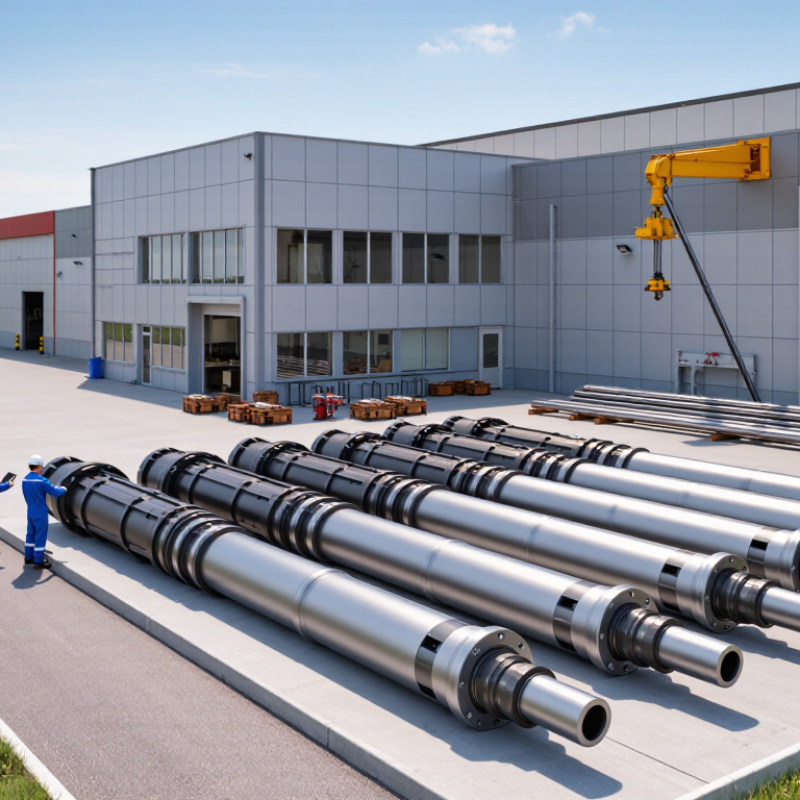
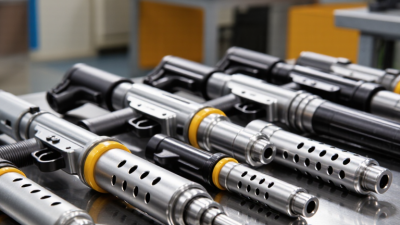
Tubing conveyed perforating, or TCP, uses a perforating gun lowered into a well on production tubing. The gun remains positioned at the target depth during controlled firing. Shaped charges create narrow, high-energy jets. These jets pierce the casing, cement, and nearby formation. The openings provide channels for oil or gas to enter the wellbore. A typical Tcp Gun System includes a carrier, shaped charges, detonators, firing head, and pressure-rated connections. Each part must work under heat, pressure, vibration, and fluid exposure.

TCP offers accurate placement and can perforate long intervals in one operation. It also supports underbalanced or selective completion designs when the well plan requires them. Manufacturing quality matters greatly here. Engineers check charge spacing, thread strength, pressure resistance, and firing reliability. A small dimensional error can affect tunnel shape and flow performance. Design is not always elegant. Field conditions often expose assumptions made in the workshop. Reliable suppliers therefore use traceable materials, controlled assembly, documented testing, and qualified personnel.

Tips: Confirm the target depth and casing dimensions before deployment. Match the gun’s pressure and temperature ratings with actual well conditions. Review debris control, perforation density, and post-job evaluation plans. Never treat a standard configuration as universally suitable. A short engineering review can prevent an expensive mistake.

Why China Is a Major TCP Perforating Gun Manufacturing Hub

China has become a major TCP perforating gun manufacturing hub because its industrial base supports complete, responsive production. The 2024 UNIDO Industrial Statistics Yearbook reports that China generated about 31% of global manufacturing value added in 2022. That scale supports steel processing, precision machining, electronics, and pressure testing under one supply network.

The Energy Institute Statistical Review 2024 recorded China’s oil production at roughly 4.2 million barrels per day in 2023. Its large energy market also creates practical demand for tubing-conveyed perforating systems. Manufacturers can test gun bodies, shaped-charge interfaces, and a Tcp Firing Head in field-relevant conditions. Shorter logistics routes help reduce replacement delays. This matters when a completion schedule depends on one pressure-rated assembly.

Experience still varies between factories. Some suppliers document dimensional control carefully, while others provide limited fatigue or temperature evidence. That weakness deserves attention. Buyers should request material certificates, test records, pressure-cycle results, and traceability for every critical component. ISO 9001 procedures help, but paperwork alone cannot prove downhole performance.

Tips: Compare test depth, temperature rating, firing reliability, and transportation protection. Ask whether the supplier has completed similar well programs. Review engineering drawings before ordering, especially thread details and safety barriers. A capable manufacturer should explain failure modes clearly, not only quote a low price.

Key Criteria for Evaluating Chinese TCP Perforating Gun Manufacturers

What Are China Top TCP Perforating Gun Manufacturers?

Key Criteria for Evaluating Chinese TCP Perforating Gun Manufacturers

Selecting a Chinese TCP perforating gun manufacturer requires evidence, not attractive brochures. API Spec 19B provides a recognized framework for evaluating perforator performance through controlled testing. Ask for test records covering shot density, phasing, penetration, debris, and pressure conditions. These details matter when the gun is deployed several thousand meters below the surface.

Manufacturing quality deserves close inspection. ISO 9001 certification is useful, but it does not prove field reliability. Verify material certificates, heat-treatment records, dimensional reports, and explosive-component traceability. The 2023 IEA Oil 2024 report highlights continued investment in mature-field production and well interventions. That trend increases demand for dependable completion equipment, especially where workover costs are high. Request evidence from comparable temperature and pressure applications.

Digital documentation is another practical filter. A serious supplier should provide drawings, operating envelopes, inspection plans, and nonconformance procedures. API’s 2022 Global Standards program emphasizes documented quality systems across oilfield equipment supply chains. Still, paperwork can hide weak process control. Inspect the factory, interview quality engineers, and review sample rejection data. A lower quotation may appear efficient. It may later create costly delays. I would also compare delivery performance over twelve months, not one impressive project. Perfect data is rare, and that itself deserves attention.

Leading China-Based TCP Perforating Gun Manufacturers

What Are China Top TCP Perforating Gun Manufacturers?

China-based TCP perforating gun manufacturers are gaining attention as operators seek reliable, configurable completion equipment. The IEA Oil 2024 report forecasts global oil demand at 105.4 million barrels per day by 2030. That outlook keeps well-completion efficiency important, even as project requirements become stricter.

Leading manufacturers should demonstrate more than competitive pricing. Buyers should examine gun diameters, pressure ratings, temperature limits, shot density, phasing options, and carrier recovery methods. Compliance with API RP 19B supports consistent perforator evaluation. SPE technical papers also emphasize that penetration depends on formation strength, casing properties, charge design, and standoff distance. Details matter.

Look for traceable steel batches, controlled machining, documented explosive-charge performance, and repeatable pressure testing. Factory acceptance records should identify serial numbers, test pressures, and inspection results. Practical suppliers can also adapt TCP systems for long intervals, selective firing, and complex completion programs. Their engineering teams should explain limitations clearly.

The market is not perfectly transparent. A polished catalog proves little. Low prices can hide testing gaps, delivery risks, or weak field support. I would request independent test evidence and recent deployment references before approval. That extra step may feel slow. It often prevents expensive surprises. Manufacturers with disciplined quality systems, responsive technical support, and realistic performance claims deserve closer consideration.

What Are China Top TCP Perforating Gun Manufacturers? - Leading China-Based TCP Perforating Gun Manufacturers

Brand-neutral industry comparison table for evaluating China-based TCP perforating gun manufacturers. The figures below represent commonly specified technical ranges and purchasing criteria; exact values must be confirmed against each supplier’s datasheet, qualification records, and well-specific design.
Evaluation Dimension Common Industry Data or Requirement Typical TCP Application Recommended Verification Evidence
Operating principle Tubing-Conveyed Perforating
Perforating guns are conveyed on production tubing, drillpipe, or workstring and fired downhole.
Perforating long intervals, high-deviation wells, offshore wells, and wells where wireline conveyance is unsuitable. System drawings, deployment procedures, and documented compatibility with the selected conveyance string.
Casing-size compatibility Common casing sizes used in TCP programs include 4½ in, 5½ in, 7 in, 9⅝ in, and 13⅜ in. Gun outside diameter must maintain adequate clearance inside the casing. Completion and stimulation programs across conventional, unconventional, vertical, deviated, and horizontal wells. Dimensional drawings showing gun OD, dressed OD, minimum drift clearance, and casing-size limits.
Perforation-shot density Common design values include approximately 4–12 shots per foot, selected according to formation, completion strategy, and required inflow area. Reservoir entry, hydraulic-fracturing initiation, selective production, and injection-zone communication. Perforation tunnel test reports, shot-density configuration sheets, and formation-specific design calculations.
Phasing options Frequently specified phasing includes 0°, 60°, 90°, 120°, 135°, 180°, and 360°, depending on the gun and charge arrangement. Controlling radial distribution of perforations and optimizing fracture or inflow orientation. Phasing diagrams, charge-layout drawings, and verified gun-loading records.
Perforating charge performance Performance is normally assessed by penetration depth, entrance-hole diameter, debris generation, and retained casing strength. Results depend on charge type, casing, cement, and formation simulation. Creating conductive flow paths through casing, cement sheath, and near-wellbore formation. API RP 19B or equivalent test reports, target penetration data, and test-stand photographs or records.
Pressure and temperature rating Ratings vary by gun architecture, seals, carrier, initiator, and completion environment. High-temperature and high-pressure service should be specified on a project basis. Deep, hot, high-pressure, sour, offshore, and high-rate completion operations. Pressure-temperature qualification records, seal-material specifications, and independent or witnessed test documentation.
Firing-system compatibility TCP systems may use hydraulic, mechanical, pressure-operated, or electronic firing systems, subject to the selected completion design. Single-zone or multi-zone perforating where controlled initiation and operational safety are critical. Firing-system schematics, compatibility matrix, arming procedures, and safety interlock documentation.
Selective-zone capability Multi-zone assemblies can combine perforating guns, spacers, firing heads, isolation tools, and release or recovery components. Selective perforation of multiple intervals in one trip or controlled stimulation of separate zones. Assembly drawings, zone-spacing tolerances, firing-sequence documentation, and full-string function tests.
Material and corrosion resistance Material selection should account for H₂S, CO₂, chlorides, completion fluids, temperature, and exposure time. NACE MR0175/ISO 15156 may apply to sour-service environments. Sour-gas, high-salinity, acidized, and long-duration downhole operations. Material certificates, corrosion-resistance data, sour-service compliance statement, and elastomer compatibility testing.
Gun-length and modularity Modular gun sections allow the total perforated interval to be configured according to casing geometry, transport limits, and required shot count. Short pay zones, extended perforated intervals, stage perforating, and customized completion strings. Section-length options, connection drawings, maximum assembly length, and make-up torque specifications.
Quality-management controls Critical controls include incoming-material inspection, dimensional inspection, explosive-component traceability, assembly records, and final functional testing. Reducing misfire risk, improving repeatability, and supporting project documentation. ISO 9001 certificate, inspection and test plans, batch traceability, nonconformance procedures, and final release records.
Export and compliance documentation International projects may require technical dossiers, packing lists, transport documentation, explosive-shipment compliance, and destination-country approvals. Cross-border supply, offshore logistics, and projects involving regulated energetic components. Sample export package, dangerous-goods documentation, product certificates, and applicable regulatory declarations.
Testing and after-sales support Important support capabilities include engineering review, completion-string simulation, pre-job inspection, field supervision, failure analysis, and post-job reporting. Complex or high-consequence wells requiring local technical coordination and rapid troubleshooting. Service response procedure, sample job report, engineering support scope, spare-parts policy, and warranty terms.
Procurement note: TCP perforating systems contain regulated energetic components. Final selection should be based on well conditions, approved completion design, applicable API or ISO requirements, local regulations, and documented supplier qualification rather than price or catalog range alone.

How Chinese Manufacturers Compare in Technology and Product Quality

Comparing China’s top TCP Perforating Gun manufacturers requires more than reading a catalog. Experienced buyers examine pressure ratings, shot density, phasing accuracy, and material traceability. A reliable manufacturer can explain performance under defined temperature and pressure conditions. Factory audits often reveal more than polished brochures. Look for calibrated test equipment, documented inspections, and technicians who understand failure modes clearly. Small details matter. Consistent thread protection can prevent damage before deployment.

Technology differences appear in design and testing. Some Chinese factories use computer-assisted modeling to improve charge placement and reduce deformation after operation. Others focus on modular gun sections, faster assembly, and compatibility with common completion systems. Product quality depends on process control, not equipment alone. Incoming steel inspection, heat-treatment records, dimensional checks, and non-destructive testing should be available for review. A sample acceptance report is useful when it lists actual measurements. Not every certificate tells the full story.

Field performance separates capable suppliers from average ones. Ask for anonymized case data, operating limits, and evidence from comparable wells. Communication matters when a program changes late. Can the engineering team revise phasing, connection details, or logistics without confusion? Chinese manufacturers can offer competitive engineering support and flexible production, yet quality may vary between batches. Independent inspection and witnessed testing remain valuable. I would not judge a supplier by price alone. A cheaper Perforating Gun can create expensive delays. Reliable dimensions, consistent performance, clear documentation, and responsive technical support deserve closer attention.

How to Select the Right TCP Perforating Gun Manufacturer in China

Selecting a TCP perforating gun manufacturer in China requires more than comparing prices. The IEA’s Oil 2024 report projects global oil demand to reach about 104.3 million barrels per day by 2030. This pressure encourages faster completions, but speed should not replace engineering discipline. Ask whether the manufacturer can match gun metallurgy, pressure ratings, shaped-charge design, and well-temperature limits to your completion program.

Request evidence, not attractive brochures. API RP 19B provides standardized methods for evaluating perforator performance, including penetration, casing damage, and entrance-hole quality. A reliable supplier should provide traceable test records, dimensional inspection data, lot numbers, and material certificates. Check whether each Modular Perforating Gun is assembled under documented procedures. Small details matter, such as connector fit, seal condition, thread protection, and clear redress instructions.

Field experience deserves equal weight. Review case histories from wells with similar casing grades, deviation, temperature, and reservoir pressure. Ask about misruns, recovery rates, and corrective actions. The answers may reveal more than sales claims. A factory audit can also expose weaknesses: poor storage, mixed components, or incomplete calibration records. I would not select the lowest quotation automatically. Sometimes the cheapest gun creates expensive delays. Yet premium pricing is not proof of quality either; that assumption needs challenging. Evaluate technical support, delivery consistency, inspection transparency, and verified performance together.

Self-Cleaning Perforating Systems from China: Factory Solutions for Reliable, High-Performance Flow

Self-Cleaning Perforating Systems from China offer a practical factory solution for improving flow performance in oil and gas wells. Designed by experienced suppliers and manufacturers, these systems combine self-cleaning shaped charges, high-pressure perforating guns, and specialized downhole components. The integrated design supports reliable deployment while helping operators create cleaner, more conductive perforation tunnels.

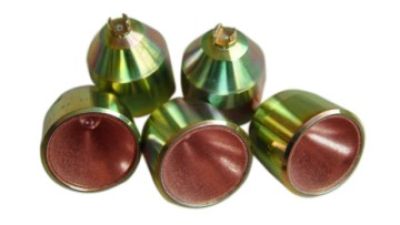
The shaped charges use a reactive liner made with carefully selected energetic materials. When initiated during perforation, the liner produces an additional exothermic reaction that releases substantial energy inside the perforation tunnel. This increases local pressure and generates a high-velocity backflow, helping remove loose debris, compacted particles, and residue from the tunnel and surrounding damaged zone. By reducing obstruction near the entry path, the system can improve tunnel conductivity and promote more efficient formation-to-wellbore communication.

China-based factories can provide configurable solutions for different well conditions, gun sizes, pressure requirements, and completion designs. Quality-focused production, engineering support, and coordinated component testing help ensure consistent system performance from manufacturing through field deployment. Operators seeking dependable flow enhancement can work with qualified suppliers to select a self-cleaning configuration suited to their reservoir and perforating program.

FAQS

Why has China become a major TCP perforating gun manufacturing hub?

Its industrial network supports steel processing, precision machining, electronics, and pressure testing. Production is closely connected.

How does China’s energy market support TCP equipment development?

China’s large oil sector creates practical demand for tubing-conveyed completion equipment. Manufacturers can test assemblies under field-relevant conditions.

What should buyers check before selecting a manufacturer?

Review pressure ratings, temperature limits, gun diameters, shot density, phasing, and recovery methods. Details matter.

Why are material certificates and traceability important?

They connect critical components to specific steel batches, inspections, and test records. This supports accountability.

Does quality certification prove downhole performance?

No. A quality procedure helps, but paperwork cannot fully prove field reliability. Independent evidence still matters.

What testing records should a buyer request?

Ask for pressure-cycle results, dimensional inspections, firing reliability data, and serial-numbered acceptance records. Request recent evidence.

How can buyers evaluate technical capability?

Ask about similar well programs, long intervals, selective firing, temperature exposure, and recovery methods. Clear explanations matter.

Why can a low purchase price create problems?

It may reflect limited testing, weak documentation, delivery risks, or poor technical support. Cheap can become expensive.

What should engineering teams review before ordering?

Review drawings carefully, including thread details, pressure barriers, dimensions, and transportation protection. Small errors matter.

Are all leading manufacturers equally reliable?

No. Factory experience varies, and polished catalogs prove very little. I would verify everything.

Conclusion

This article provides a practical overview of Tcp Perforating Gun systems, explaining their role in well completion and how they use controlled, shaped charges to create flow paths between the wellbore and surrounding reservoir. It also examines why China has become an important manufacturing hub, supported by industrial supply chains, engineering expertise, production capacity, and competitive customization options.

The guide outlines the main criteria for evaluating Chinese manufacturers, including design capability, material quality, manufacturing consistency, pressure and temperature performance, testing procedures, technical support, certifications, delivery reliability, and after-sales service. It compares how manufacturers may differ in technology, product quality, customization, and quality control, then offers a structured approach for selecting the right supplier based on well conditions, operational requirements, compliance expectations, budget, and long-term cooperation potential.
Isabella

Isabella

Isabella is a highly skilled marketing professional with a deep expertise in the oil and gas industry, particularly in downhole perforating systems. With a strong academic background and a keen interest in technological advancements, she plays a pivotal role in promoting her company's innovative......
Previous Why Choose an Oil Perforator for Oil Drilling?