Leave Your Message
0%

When you're comparing Time-Delay Booster manufacturers from around the world, it's tempting to go by product names and flashy catalog claims. But honestly, the real differences? They tend to show up in the less glamorous stuff—documented quality systems, traceable production, how responsive technical support actually is, and whether safety practices are transparent. Small things like certification coverage, service scope, or delivery reliability can matter a lot more than a glossy brochure.

You know how we tend to blame human error when things go wrong? Safety researcher Sidney Dekker has a different take: he says human error is really just a symptom of something deeper going on inside the system. He wasn't specifically talking about Time-Delay Booster manufacturing, but honestly, the lesson still applies—if you want dependable products, you need solid processes, well-trained people, and careful oversight. And yeah, details matter. More than we'd sometimes like to admit.

Okay, so this guide is basically here to help you get a clearer picture of manufacturers around the world—without getting lost in all the marketing fluff. We’re looking at things like company history, how they handle quality, where they actually operate, and any compliance info that’s publicly available. That said, keep in mind that availability and requirements can shift depending on where you are. So don’t just take anyone’s word for it—double-check directly with the manufacturer and talk to qualified local pros. At the end of the day, there’s no one-size-fits-all supplier. It’s also worth keeping in mind that public information has gaps—and when disclosure is limited, it’s tough to make a reliable assessment. This is meant as a measured starting point for informed research, not an endorsement, and definitely not a substitute for professional evaluation.
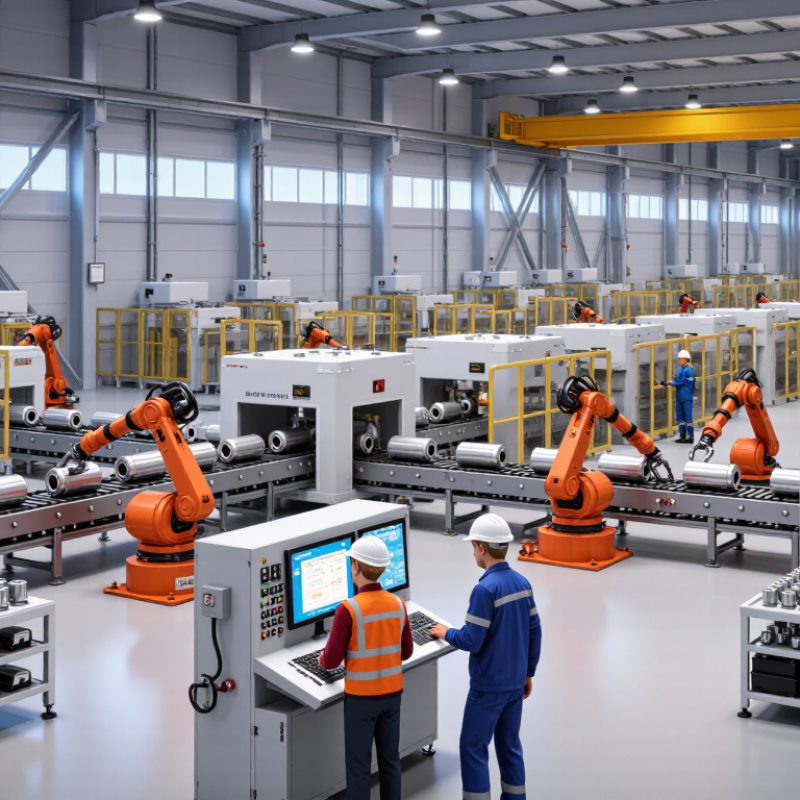
Top Time Delay Booster Manufacturers Worldwide?

Defining Time-Delay Boosters: Timing, Signal Gain, and Operating Principles

A time-delay booster combines a controlled pause with increased signal strength. The delay sets when an output responds; the gain determines how strongly it responds. Timing comes first. In a typical circuit, an input change charges a capacitor or starts a digital timer. When the measured interval reaches a set threshold, the circuit enables its output stage. This sequence helps prevent brief noise or contact bounce from triggering an unwanted response.

Signal gain is not simply “more power.” An amplifier may raise voltage, current, or both, depending on the design. A Booster Charge stage, for example, can provide a stronger drive after the delay, but its load and supply limits still matter. Engineers check the input range, switching threshold, output capacity, and heat under realistic conditions. Small details count. A long cable or a changing load can affect performance.

The operating principle sounds tidy on a diagram. Real components drift with temperature, age, and manufacturing tolerances, so the actual delay may differ slightly from its nominal value. Testing with an oscilloscope can reveal whether the output switches cleanly and at the intended time. It is worth asking whether the delay is repeatable across operating conditions, not just on a workbench. That question is easy to overlook.

Main Types: Pneumatic, Electrical, and Process-Control Designs

Time-delay boosters combine a delayed response with a stronger output signal. Their design affects timing accuracy, installation, and maintenance. Buyers comparing manufacturers should look beyond advertised delay ranges. Ask how each unit performs under changing pressure, temperature, and signal conditions.

Pneumatic designs create delay by controlling airflow through an orifice or reservoir. They suit installations where air is already available and electrical control is limited. A technician can inspect tubing, fittings, and pressure settings directly. Small leaks matter. Dust or moisture can also affect repeatability, so filtration and routine checks are important.

Electrical designs use timing circuits or relays to delay an output. They can offer convenient adjustments and clear integration with electrical controls. Confirm the supply voltage, output rating, and response tolerance. Process-control designs connect delay functions with controllers or instrumentation signals. They support more complex sequences, but configuration errors may be harder to spot. A practical review includes wiring diagrams, calibration procedures, environmental ratings, and test records. I would not assume a digital display guarantees precise timing; verify the actual output with suitable test equipment. Manufacturers that document operating limits and provide clear commissioning guidance make comparison more reliable.

Worldwide Manufacturer Landscape: Regions, Product Lines, and Applications

The worldwide time delay booster market is better understood by region and engineering focus than by a single ranking. Manufacturers in Europe and North America often serve process plants, packaging lines, and equipment builders with pressure-boosting units, timed control assemblies, and configurable pneumatic systems. East Asian suppliers commonly offer compact modules for factory automation, where installation space and repeatable cycle timing matter. Product ranges differ, though; “booster” can describe different equipment across industries.

Applications shape the specification. A packaging line may need a brief pressure increase between filling and sealing, while a test station may require a stable output after a programmed delay. Buyers should compare operating pressure, flow rate, delay accuracy, duty cycle, service access, and documentation. Ask how performance is verified under real load, not only on a catalog sheet.

Small details matter.

Regional availability does not guarantee local technical support. Confirm spare-part lead times, commissioning options, and whether control interfaces match existing machinery. A clear Booster Transfer plan can help teams document settings when equipment moves between production cells.

Still, timing claims can be difficult to compare across suppliers, and published tolerances may leave practical questions unanswered. Request a sample test protocol.

Then review it with the people who will maintain the system.

Comparing Specifications: Delay Range, Pressure Ratio, Flow, and Repeatability

Time-delay boosters should be compared at the same inlet pressure, load, and temperature. Otherwise, a wider delay range may look better on paper but perform poorly in service. The International Federation of Robotics reported 541,302 industrial robot installations worldwide in 2023, highlighting the scale of automated production where repeatable pneumatic timing matters. For each unit, record the minimum and maximum delay, adjustment method, and drift across repeated cycles. Small differences matter. A valve that shifts several milliseconds after warming can disrupt a fast pick-and-place sequence.

Pressure ratio and flow need equal scrutiny. Report inlet and outlet pressures together; a ratio alone can hide a weak output under load. Specify flow conditions, too. ISO 6358-1:2013 provides standardized methods for measuring pneumatic component flow characteristics, helping buyers compare test results more fairly. Ask whether the stated flow is measured at the same pressure and with comparable fittings. Repeatability should be tested over many cycles, not inferred from one bench reading. Ideally, request minimum, maximum, and average delay, plus test conditions. Published figures rarely show installation effects. That is worth questioning. A long tube, changing supply pressure, or warm enclosure may alter real-world timing, so confirm performance in the intended setup.

Top Time Delay Booster Manufacturers Worldwide? — Comparing Specifications: Delay Range, Pressure Ratio, Flow, and Repeatability
Anonymous Specification Class Typical Delay Range Nominal Pressure Ratio* Indicative Flow Capacity** Typical Delay Repeatability Common Application
Compact pneumatic timer and booster assembly Approximately 0.1–10 seconds About 1.5:1–2:1 Approximately 100–500 NL/min Typically specified as a percentage of the set delay; confirm the test conditions on the product datasheet Short delays and intermittent actuation in compact pneumatic circuits
General-purpose adjustable delay unit Approximately 0.5–30 seconds About 2:1 Approximately 300–1,000 NL/min Often affected by supply pressure, temperature, and adjustment setting; verify the guaranteed value with the supplier Sequencing and timed signal amplification in machine control
Extended-delay pneumatic configuration Approximately 5–60 seconds About 2:1–3:1 Approximately 200–800 NL/min Longer settings may show greater timing variation; check repeatability across the full adjustment range Processes requiring a longer dwell before a pneumatic output signal
High-flow booster with separate timing control Approximately 0.2–30 seconds, depending on the timing element About 2:1–4:1 Approximately 800–3,000 NL/min Timing performance is mainly determined by the timer; flow demand and circuit volume can affect observed delay Higher-consumption actuators and circuits requiring boosted output pressure
Precision-oriented timing configuration Approximately 0.1–10 seconds About 1.5:1–2:1 Approximately 100–600 NL/min Look for a published repeatability tolerance and defined pressure, temperature, and cycle conditions Applications where consistent timing matters more than maximum flow

Important: This is a manufacturer-neutral engineering comparison, not a ranking or a set of verified specifications for particular products. The ranges are indicative reference envelopes and should not be treated as guaranteed performance. Actual delay, pressure ratio, flow, and repeatability depend on design and test conditions. Confirm pressure-ratio definitions, flow test conditions, operating pressure, and timing tolerances in the relevant datasheet. NL/min denotes normal litres per minute; flow ratings are not directly comparable unless their reference conditions match.

Relevant Benchmarks: IEC 61812-1 Time-Relay Requirements and ISO 9001:2015

Top Time Delay Booster Manufacturers Worldwide?

For buyers comparing time-delay booster manufacturers, IEC 61812-1 offers a useful technical benchmark. It addresses time-relay requirements and testing, helping teams check whether a device performs consistently under stated conditions. Compare timing ranges, repeatability data, supply-voltage limits, and environmental ratings. A relay set to 30 seconds should not drift noticeably between repeated tests. Small differences matter. The standard is a reference, not proof that every application will behave identically.

ISO 9001:2015 focuses on a manufacturer’s quality management system, not a product’s technical performance. Ask how the supplier controls design changes, keeps calibration records, handles nonconformities, and traces production batches. These practices make test results easier to verify. Review actual documents, such as inspection records and calibration dates, rather than relying only on a certificate. A certified system can still have gaps. That deserves a closer look.

Tips: Request the test conditions behind timing claims, including load and ambient temperature. Check that quoted tolerances match your operating needs. Ask for sample records, then compare them with the delivered unit’s identification label. If a specification is unclear, pause and seek written clarification.

Selecting a Manufacturer: Testing, Certifications, Technical Support, and Lifecycle Cost

Top Time Delay Booster Manufacturers Worldwide?

A manufacturer’s brochure is a starting point, not proof of performance. Ask for test reports showing timing accuracy, repeatability, and operation across the stated temperature and power ranges. Check how units behave after power interruptions, and whether acceptance tests can be witnessed. Small timing drift can matter. ISO’s 2022 Survey reported over 1.26 million valid ISO 9001 certificates worldwide, but certification alone does not verify a specific product’s performance. Request product-level evidence, traceable calibration records, and clear pass/fail criteria.

Technical support deserves equal scrutiny. Ask who handles fault diagnosis, typical response times, spare-part availability, and firmware updates. Uptime Institute’s 2024 Annual Outage Analysis found that 54% of surveyed organizations said their latest significant outage cost more than $100,000. That finding concerns data-center outages, not booster devices, but it illustrates why support delays can carry real costs. A certificate cannot fix a unit sitting idle. Check references from installations with similar operating conditions.

Compare lifecycle cost, not just the purchase price. Include commissioning, calibration, energy use, replacement parts, shipping, and expected downtime. Request a written service schedule and realistic repair lead times. Then compare those costs over the same ownership period. A low quote may still be sensible; it may also hide costly service gaps. The distinction should be documented, not guessed.

FAQS

What does a time-delay booster do?

It delays a response, then strengthens the output signal. Timing and output depend on its design.

What are the main types of time-delay boosters?

Pneumatic models use controlled airflow. Electrical models use timing circuits or relays. Process-control models work with controllers or instrumentation signals.

When might a pneumatic design be suitable?

It may suit a site with an existing air supply and limited electrical control. Check its tubing, fittings, and pressure settings. Small leaks matter.

What should I check on an electrical design?

Confirm supply voltage, output rating, and response tolerance. Check how it connects to existing electrical controls.

Do process-control models need extra checks?

Yes. Review wiring diagrams, calibration steps, environmental ratings, and test records. Configuration mistakes can be harder to notice.

How can I compare delay specifications fairly?

Compare units at the same inlet pressure, load, and temperature. Record adjustment method and delay across repeated cycles. One reading is not enough.

Why check pressure ratio and flow together?

A pressure ratio alone may hide weak output under load. Ask for inlet and outlet pressures, plus the flow test conditions.

How can installation affect timing?

Long tubing, changing supply pressure, or a warm enclosure may shift real-world timing. Test the unit in its intended setup. Paper figures can mislead.

Does a digital display guarantee precise timing?

No. Verify the actual output with suitable test equipment. I would not skip this check, even when the display looks convincing.

Conclusion

A Time-Delay Booster combines a controlled delay with signal or pressure amplification, helping equipment respond at a defined moment rather than immediately. Its operating principle depends on the design: pneumatic units use air-flow or pressure effects, electrical versions rely on timing circuits, and process-control designs coordinate signals within a larger system. These products serve varied industrial applications, so manufacturers worldwide offer different configurations to suit operating conditions and installation needs.

When comparing options, consider delay range, pressure ratio, flow capacity, repeatability, and performance under expected conditions. IEC 61812-1 can provide a relevant reference for time-relay requirements, while ISO 9001:2015 relates to quality-management systems. A sound manufacturer evaluation should also examine product testing, applicable certifications, technical support, documentation, and expected lifecycle costs. Matching these factors to the application can help balance timing accuracy, reliability, and long-term service needs.

Isabella

Isabella

Isabella is a highly skilled marketing professional with a deep expertise in the oil and gas industry, particularly in downhole perforating systems. With a strong academic background and a keen interest in technological advancements, she plays a pivotal role in promoting her company's innovative......
Previous What Are the 2026 Top Downhole Perforating Tools?