
 +86-15829394411


0102030405
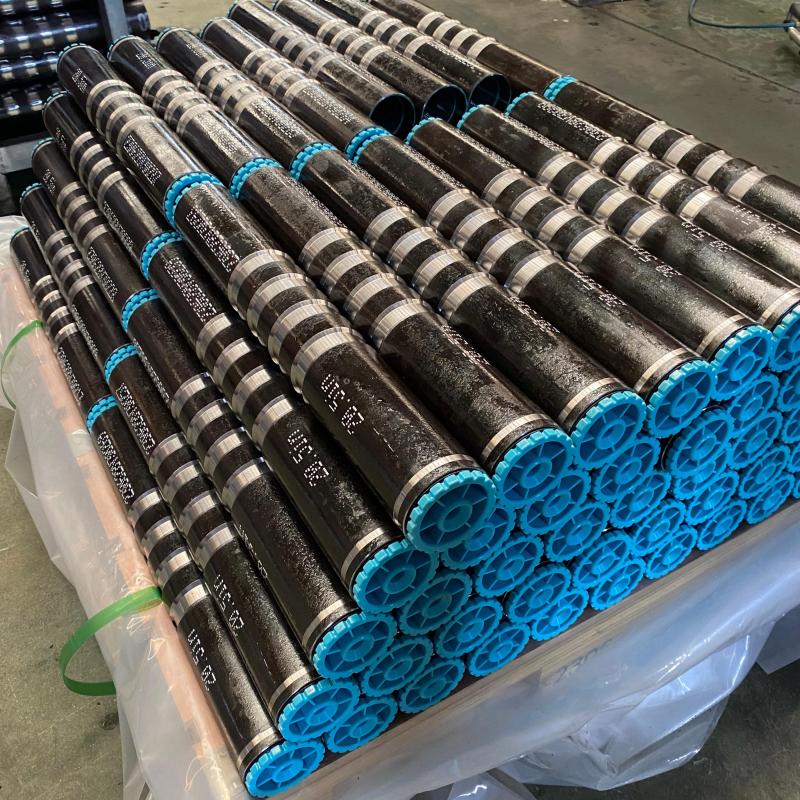
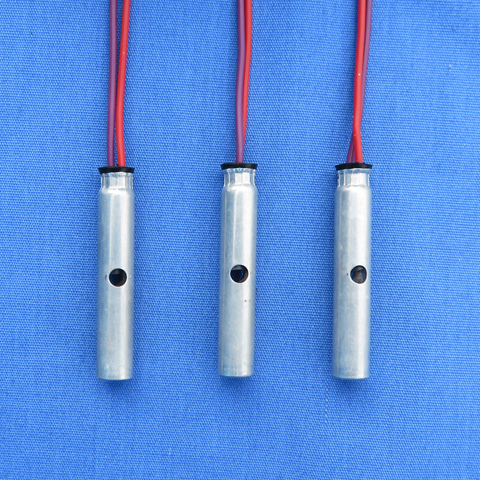
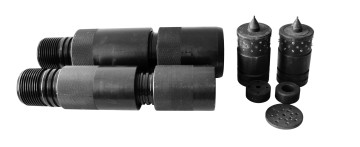
China Suppliers Factory: Advanced Fracturing Perforating Systems for Enhanced Oil Recovery Efficiency
Features and Benefits
- Improved production or injectivity
- Pre-acid or hydraulic fracture treatment
- One type of stimulation treatment
Specifications
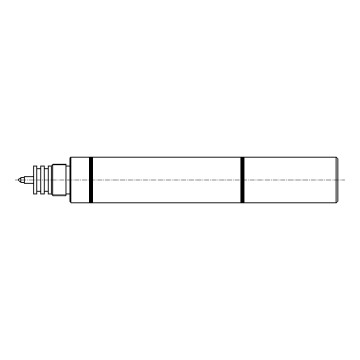
| No. | Perforator Type | O.D. (mm) | Wall Thickness (mm) | Shot Density (spm) | Energetic Material (g/shoot) | Explosive Weight (g) | Penetration (mm) | Length of Fracture (mm) | Temperature (℃/48h) |
|---|---|---|---|---|---|---|---|---|---|
| 1 | SCFH89-13/DP25 | 89 | 10 | 13 | 32 | 25 | 450 | 1200 | 160 |
| 2 | SCFH102-13-DP32 | 102 | 11 | 13 | 70 | 32 | 550 | 1200 | 160 |
| 3 | SCFH102-10/DP32 | 102 | 11 | 10 | 70 | 32 | 550 | 1500 | 160 |
| 4 | SCFH102-13/DP25 | 102 | 11 | 13 | 70 | 25 | 450 | 1500 | 160 |
| 5 | SCFH127-13/DP38 | 127 | 11 | 13 | 70 | 38 | 750 | 1500 | 160 |
| 6 | SCFH127-10/DP38 | 127 | 11 | 10 | 70 | 38 | 750 | 2000 | 160 |
| 7 | SCFH127-13/DP32 | 127 | 11 | 13 | 70 | 32 | 550 | 2000 | 160 |
| 8 | SCFH127-16-DP32 | 127 | 11 | 16 | 42 | 32 | 550 | 2500 | 160 |
| 9 | SCFH127-16-DP25 | 127 | 11 | 16 | 42 | 25 | 450 | 2500 | 160 |
Frequently Asked Questions
Q
What is a deep penetration perforator used for in oil and gas wells?
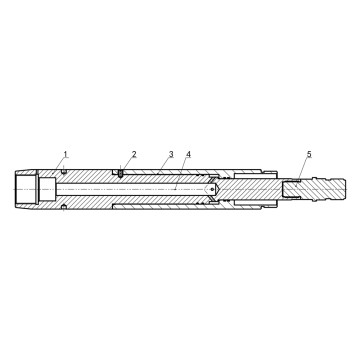
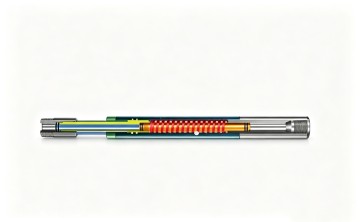
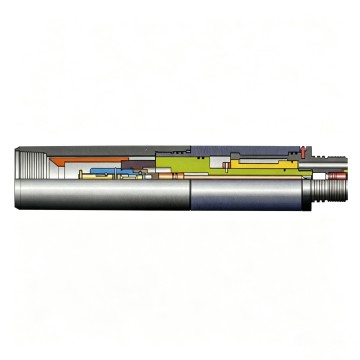
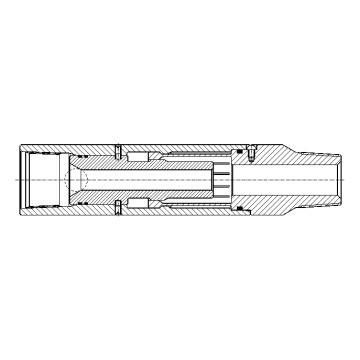
A deep penetration perforator (such as the SCFH series) is used to create long, high-conductivity channels through the casing and cement into the reservoir formation. This significantly improves production or injectivity by establishing effective flow paths between the wellbore and the reservoir.
Q
How does a deep penetration perforator support hydraulic fracturing operations?
Deep penetration perforators are commonly used as a pre-treatment step before hydraulic fracturing. The long fracture lengths they create (up to 2500 mm in the SCFH127 series) help initiate fractures more effectively, reducing the pressure required and improving the overall efficiency of the fracturing treatment.
Q
What temperature rating do these perforators support?
All perforator types in the SCFH series are rated for a maximum operating temperature of 160°C over a 48-hour period, making them suitable for a wide range of downhole well conditions including moderately high-temperature reservoirs.
Q
What is the difference between shot densities of 10 spm, 13 spm, and 16 spm?
Shot density (shots per meter) determines how many perforations are created per meter of perforated interval. Higher shot densities (e.g., 16 spm) create more flow channels per unit length, which can improve inflow performance. Lower shot densities (e.g., 10 spm) are often used when longer fracture lengths are prioritized over perforation count, as seen with models achieving up to 2000 mm fracture length.
Q
How do I select the right SCFH perforator type for my well?
Selection depends on several factors including the casing outer diameter, required penetration depth, desired fracture length, and shot density. For example, the SCFH89 series suits smaller casing sizes (89 mm O.D.), while the SCFH127 series is designed for larger completions and offers the deepest penetration and longest fracture lengths of up to 2500 mm.
Q
Can these perforators be used as a standalone stimulation treatment?
Yes. One of the key benefits of the SCFH deep penetration perforator series is that it can function as a single-step stimulation treatment on its own. In certain well conditions, the combination of deep penetration and extended fracture length achieved during perforating may eliminate the need for additional stimulation operations such as acid jobs or hydraulic fracturing.