+86-15829394411
Leave Your Message
-
Contact WhatsApp
-
 Contact Phone
-
 Contact Email
Purpose-built perforating systems designed to maximize perforation efficiency, cluster spacing accuracy, and fracture initiation performance in horizontal wellbores.
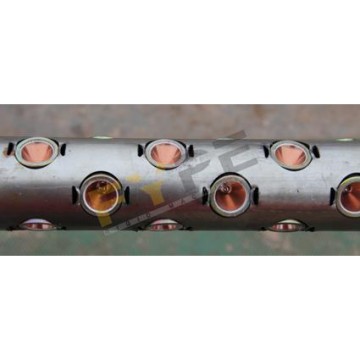
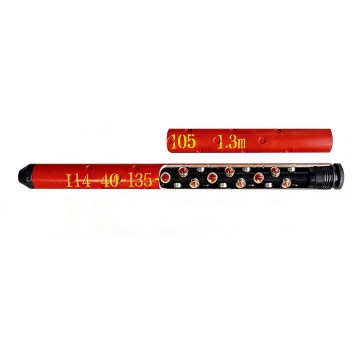
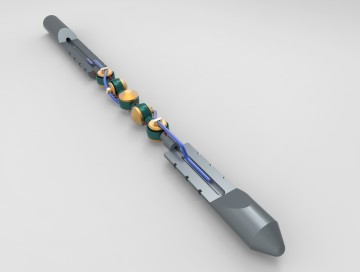
A deep-dive into the technology, engineering principles, and operational significance of horizontal perforating in modern unconventional resource development.
Horizontal perforating is the critical downhole process of creating precisely engineered entry points — perforations — through casing and cement into the reservoir formation along the horizontal wellbore. Unlike vertical wells, horizontal wells traverse the productive pay zone laterally, often for thousands of meters, enabling operators to access far greater reservoir volumes. Perforating guns are deployed via wireline, coiled tubing, or tubing-conveyed systems to fire shaped charges that penetrate the casing, cement sheath, and formation rock, establishing hydraulic communication pathways.
In multi-stage fracturing operations, these perforations serve as the initiation points for each hydraulic fracture stage. The geometry, density, phasing, and depth of penetration of perforations directly govern where fractures initiate, how they propagate, and ultimately how much reservoir surface area is stimulated — all of which determine the well's production performance and ultimate recovery factor.
Modern multi-stage fracturing in horizontal wells relies on meticulous perforation cluster design. Operators must balance the number of clusters per stage, inter-cluster spacing, shot density (shots per meter), phasing angle, and charge penetration depth to achieve uniform fracture initiation across all clusters simultaneously. Poor perforation design leads to dominant fractures monopolizing the treatment fluid while other clusters remain unstimulated — a phenomenon known as "limited entry" inefficiency.
Advanced perforation strategies such as Limited Entry Perforating (LEP) deliberately restrict perforation diameter to create controlled pressure differentials that force fluid distribution across all clusters. Oriented perforating aligns perforations with the maximum horizontal stress direction to optimize fracture geometry. These engineering decisions require sophisticated modeling tools, real-time downhole data acquisition, and high-precision perforating hardware capable of consistent, repeatable performance across hundreds of stages.
The global market for horizontal perforating systems has experienced substantial growth driven by the shale revolution in North America and the accelerating development of unconventional resources across China, Argentina, Saudi Arabia, and Australia. The Permian Basin, Eagle Ford, Marcellus, and Duvernay plays have collectively driven demand for millions of shaped charges annually, with multi-stage fracturing campaigns routinely involving 30 to 100+ stages per well.
China's unconventional resource development — particularly the Sichuan Basin shale gas fields operated by PetroChina and Sinopec — has emerged as one of the world's fastest-growing markets for horizontal perforating technology. Domestic manufacturers like FYPE have invested heavily in R&D and automated production capacity to compete with international service companies, offering API-compliant perforating systems at competitive price points while maintaining rigorous quality standards that meet the demands of complex multi-stage operations.
Global upstream capital expenditure in unconventional resources continues to rise, with horizontal well drilling accounting for the majority of new well completions in major shale plays. The International Energy Agency projects that tight oil and shale gas will supply an increasing share of global energy through 2040, sustaining long-term demand for advanced perforating systems. Multi-stage fracturing efficiency improvements — reducing cost per barrel of oil equivalent — remain a primary focus for operators, making high-performance perforating tools a critical investment area.
Technological advancements in shaped charge metallurgy, precision manufacturing tolerances, and gun system reliability have enabled operators to push the boundaries of perforation density and stage count, unlocking previously uneconomic reservoir sections. The convergence of big data analytics, real-time downhole monitoring, and intelligent completion systems is further transforming how perforating programs are designed, executed, and evaluated — creating new commercial opportunities for technology-forward manufacturers.
Proven scale, capability, and global reach in downhole perforating systems for multi-stage fracturing applications.
The horizontal perforating industry is undergoing rapid technological evolution driven by operator demands for greater efficiency, precision, and data integration in multi-stage fracturing campaigns.
Next-generation perforating systems are increasingly integrated with intelligent completion platforms, enabling real-time downhole pressure and temperature monitoring during perforating events. This data stream allows engineers to verify perforation effectiveness, detect cluster inefficiencies, and adjust subsequent stage designs dynamically — transforming perforating from a one-time event into an iterative optimization process.
Oriented perforating technology that aligns charges with the maximum horizontal stress azimuth is gaining rapid adoption in complex geological settings. By directing perforations in the optimal direction for fracture initiation, operators reduce tortuosity, lower breakdown pressures, and achieve more planar fracture geometries — significantly improving fracture conductivity and well productivity in tight formations.
Advances in shaped charge miniaturization and gun body engineering have pushed shot densities to unprecedented levels — exceeding 40 shots per meter in some applications. Ultra-high density perforation clusters create more uniform stress distributions around the wellbore, facilitating simultaneous fracture initiation from multiple entry points and enabling the "fracture complexity" that maximizes stimulated reservoir volume (SRV) in unconventional formations.
As operators target deeper, hotter, and higher-pressure unconventional formations — including deep shale plays in China's Sichuan Basin exceeding 4,500 meters depth — demand for ultra-high temperature, high-pressure (HTHP) perforating systems has surged. These environments require specialized explosive formulations rated to 200°C+, gun bodies engineered for 200+ MPa differential pressure, and advanced sealing technologies to ensure reliable detonation and structural integrity.
The plug-and-perf (PnP) completion method — combining retrievable or dissolvable bridge plugs with perforating gun strings — remains the dominant multi-stage fracturing approach in horizontal wells, prized for its flexibility and ability to perforate any point along the lateral. Ongoing innovations in dissolvable plug materials and rapid-deployment perforating systems are reducing PnP cycle times, lowering operational costs, and enabling more stages per day — directly improving well economics.
Machine learning algorithms and advanced reservoir simulation tools are increasingly informing perforation cluster placement decisions. By analyzing microseismic data, formation evaluation logs, production histories from offset wells, and real-time completion diagnostics, operators can identify optimal perforation intervals that maximize fracture complexity and minimize inter-well interference — a capability that is fundamentally changing how multi-stage fracturing programs are engineered and executed.
Horizontal perforating for multi-stage fracturing is deployed across a diverse spectrum of geological environments and operational contexts, each presenting unique engineering challenges and performance requirements.
In classic shale plays such as the Sichuan Basin Longmaxi Formation, Permian Basin Wolfcamp, and Marcellus Shale, horizontal perforating with multi-stage fracturing is the foundational production technology. Operators deploy high-density perforating guns with 60°–120° phasing to create multiple fracture initiation points per cluster, maximizing contact with the natural fracture network. Typical well designs involve 40–80 fracturing stages, each with 3–5 perforation clusters, requiring thousands of shaped charges per well with zero-failure reliability demands.
Deep carbonate and tight sandstone formations present extreme downhole conditions — temperatures exceeding 180°C and pressures above 150 MPa — that demand HTHP-rated perforating systems. In these environments, shaped charge performance is critical: deep penetration charges must maintain jet coherence through dense formation rock to create effective communication pathways. FYPE's HTHP perforating guns are specifically engineered for these conditions, with explosive formulations and gun body materials tested to API RP 19B Section IV standards under simulated reservoir conditions.
Re-fracturing of existing horizontal wells — targeting bypassed pay zones or restimulating depleted fracture networks — represents a growing application for slim through-tubing perforating systems. The TTP (Through Tubing Perforating) gun system enables operators to deploy perforating assemblies through existing production tubing without workover rig intervention, dramatically reducing re-stimulation costs. This application is particularly relevant in mature shale plays where thousands of wells are candidates for production enhancement through targeted re-perforating and re-fracturing campaigns.
Offshore horizontal multi-stage fracturing programs — particularly in subsea completions and deepwater environments — impose additional constraints on perforating system design. Coiled tubing-conveyed perforating assemblies must withstand long deployment times, high wellbore deviation, and complex umbilical management. Pressure-actuated firing systems and redundant initiation mechanisms are essential for reliable detonation in environments where rig time costs can exceed $500,000 per day. FYPE's pressure gun release and firing systems are engineered to meet these demanding offshore operational requirements.
Limited Entry Perforating (LEP) is an engineered approach where perforation diameter and count are deliberately restricted to create sufficient perforation friction — typically 3–7 MPa — to force hydraulic fracturing fluid to distribute uniformly across all clusters within a stage. This technique requires precisely manufactured shaped charges with tightly controlled perforation tunnel diameters (typically 8–12 mm) and consistent penetration depths. FYPE's automated production lines and rigorous quality control systems ensure the dimensional consistency required for effective LEP design implementation.
Advanced multi-stage fracturing operations increasingly integrate perforating events with real-time diagnostic systems including distributed acoustic sensing (DAS), distributed temperature sensing (DTS), and downhole pressure gauges. These monitoring systems capture the acoustic signature of perforation detonation, the thermal anomaly of fracture fluid injection, and the pressure response of each stage — providing engineers with unprecedented insight into perforation effectiveness and fracture geometry. Perforating gun systems must be designed to be compatible with these monitoring platforms, requiring careful engineering of electromagnetic interference, mechanical vibration, and thermal signatures.
Industry studies consistently demonstrate that perforation cluster efficiency — the percentage of clusters that actively accept fracturing fluid — is one of the most critical determinants of multi-stage fracturing well performance. Poorly designed or inconsistently manufactured perforating systems can result in cluster efficiencies below 40%, meaning more than half of the engineered stimulation points contribute nothing to production. FYPE's precision-manufactured perforating guns, validated through real-core target testing in simulated reservoir conditions, are engineered to deliver the dimensional consistency and penetration reliability that maximizes cluster efficiency and well productivity.
Expetro Energy Service Co., Ltd. (FYPE) — China's leading manufacturer of downhole perforating systems for multi-stage fracturing operations worldwide.

Expetro Energy Service Co., Ltd. (FYPE) is a leading manufacturer of downhole perforating systems in China, dedicated to the research, development, and production of shaped charges, perforating guns, and associated accessories for oil and gas completions. With nearly two decades of export experience and a customer base spanning 38 countries, FYPE has established itself as a trusted global partner for multi-stage fracturing perforating solutions.
Equipped with state-of-the-art automated production and inspection lines, we deliver over 2.5 million shaped charges and 500,000 meters of perforating guns annually — meeting diverse customer requirements across the global market. Daily shaped charge capacity reaches 10,000 units, with gun production lines capable of processing 100+ specification types.
Every stage of our production process strictly adheres to the API Q1 Quality Management System and ISO 9001 standards. Our professional inspection team ensures product reliability and superior performance in every delivery, from raw material sourcing through final product dispatch.
To date, our products have served customers in 38 countries worldwide and consistently earn positive feedback for performance and reliability. FYPE is dedicated to expanding its global footprint and building long-term partnerships with clients across continents, with particular strength in Asia-Pacific, Middle East, and South American markets.
Four core pillars that make FYPE the preferred partner for horizontal perforating systems in multi-stage fracturing operations globally.
Our professional inspection team operates under a quality management system certified to API Q1 and ISO 9001 standards, ensuring product reliability and superior performance in every delivery. Every shaped charge and gun body undergoes dimensional inspection, pressure testing, and explosive performance verification before shipment.
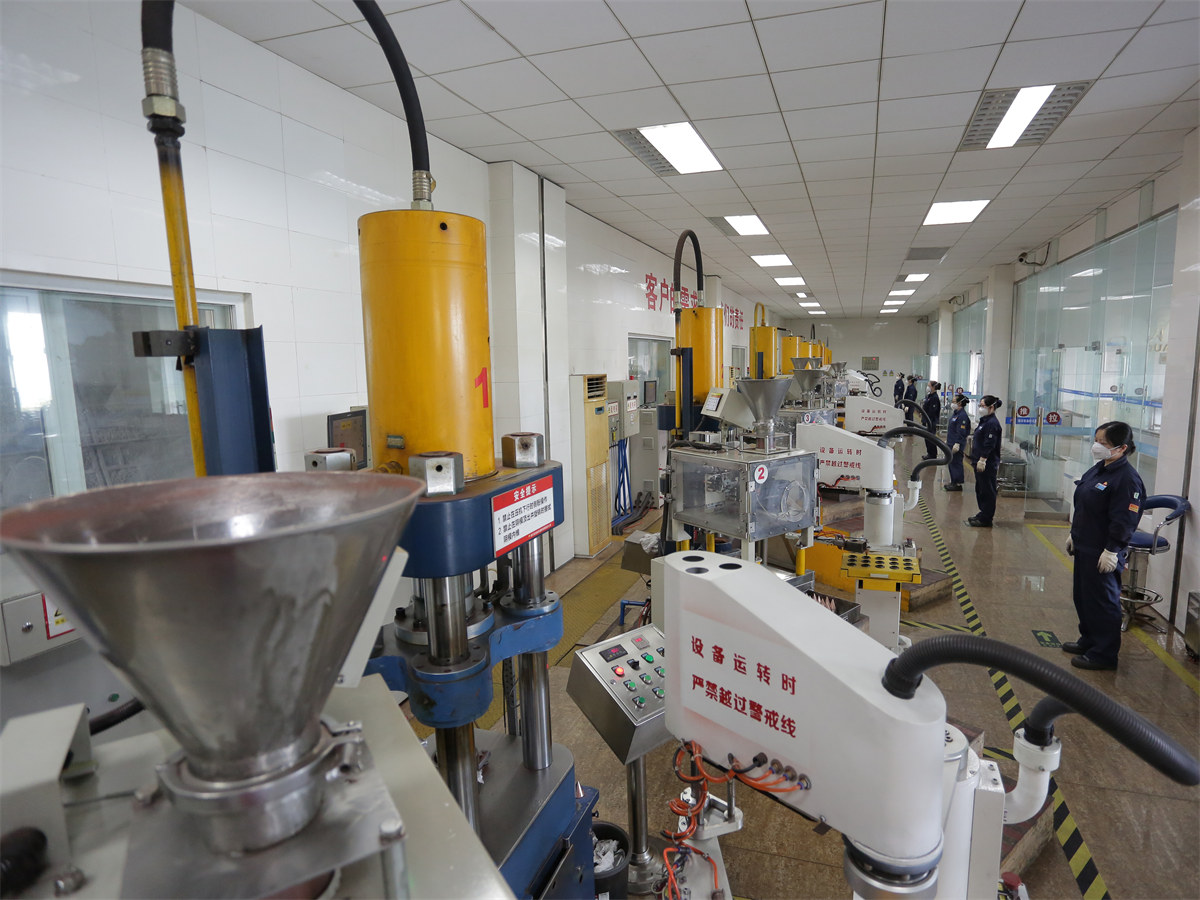
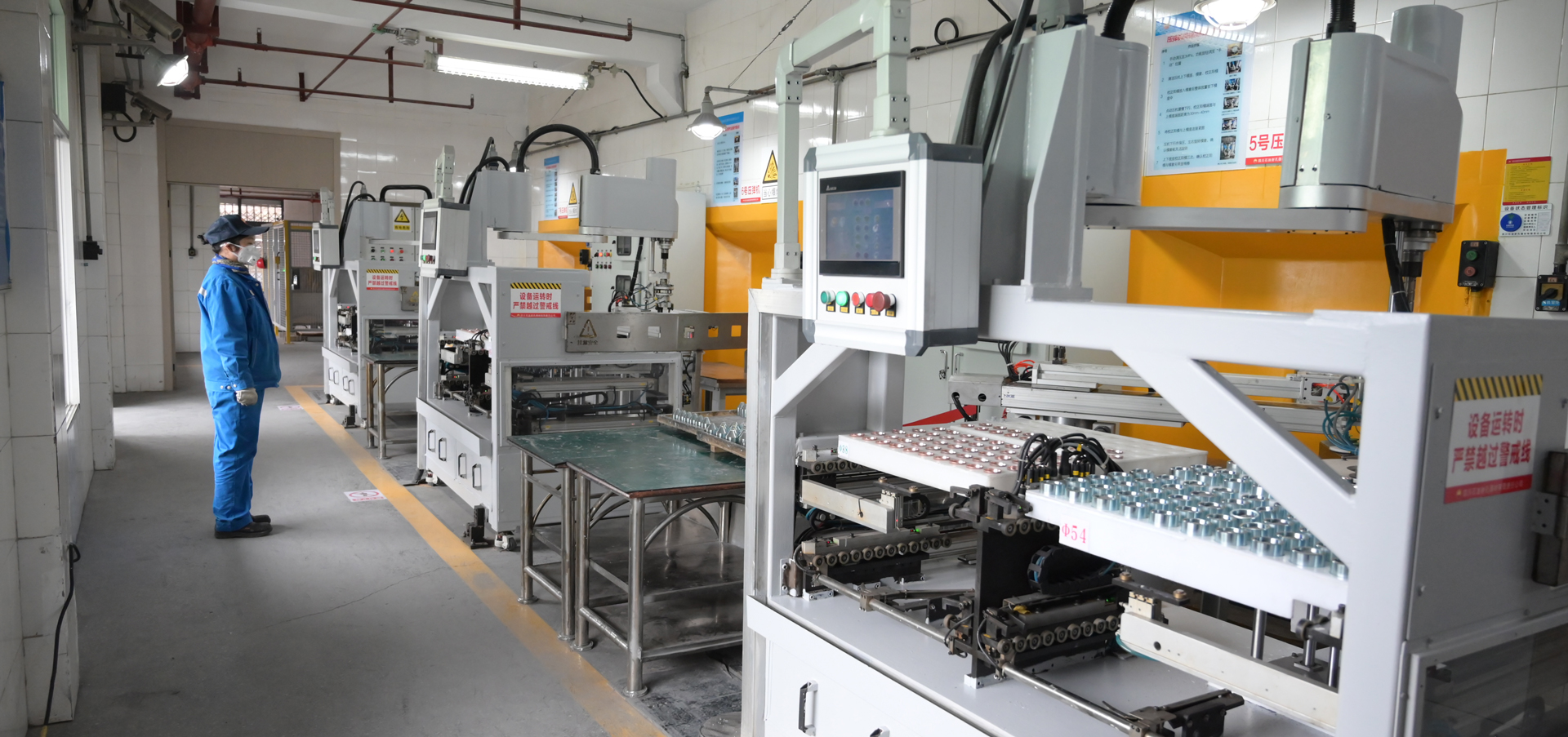
Our automated production lines ensure product consistency and enhance productivity. The daily capacity of shaped charges can reach 10,000. The perforating gun production line can meet the processing of 100+ types with different specifications — enabling rapid order fulfillment for large-scale multi-stage fracturing campaigns.
Our lab can carry out real-core target tests in simulated reservoirs, ultimate pressure resistance tests on perforation tools, and explosion mechanism tests on shaped charges. This in-house R&D capability enables continuous product innovation aligned with evolving multi-stage fracturing technology requirements.
With nearly 20 years of export experience across 38 countries, we deeply understand global market demands, regulatory requirements, and logistical complexities. We deliver trusted, tailored perforating solutions that meet the specific technical and commercial requirements of operators in diverse geological and operational environments.
To date, our products have served customers in 38 countries worldwide and consistently earn positive feedback for performance and reliability in multi-stage fracturing operations.
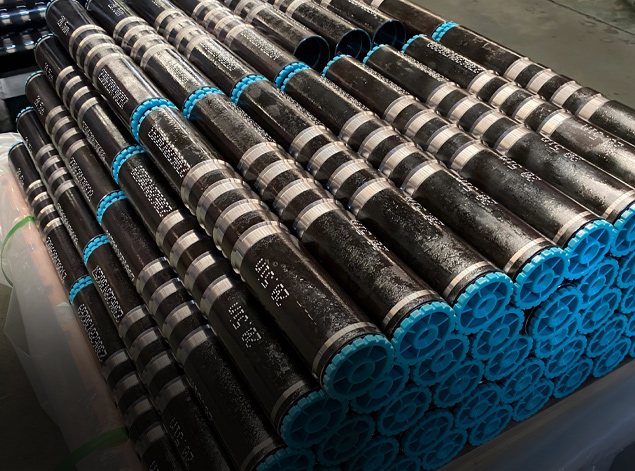
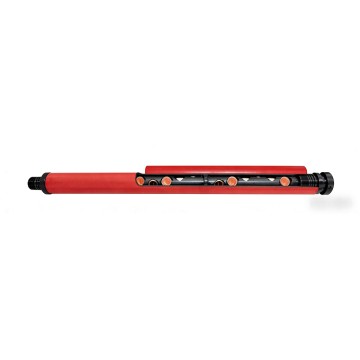
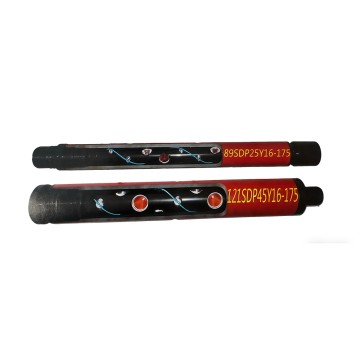
Instead of scallops, it can shoot regardless of the charge tube's angular position — ideal for horizontal multi-stage fracturing where gun rotation cannot be controlled.
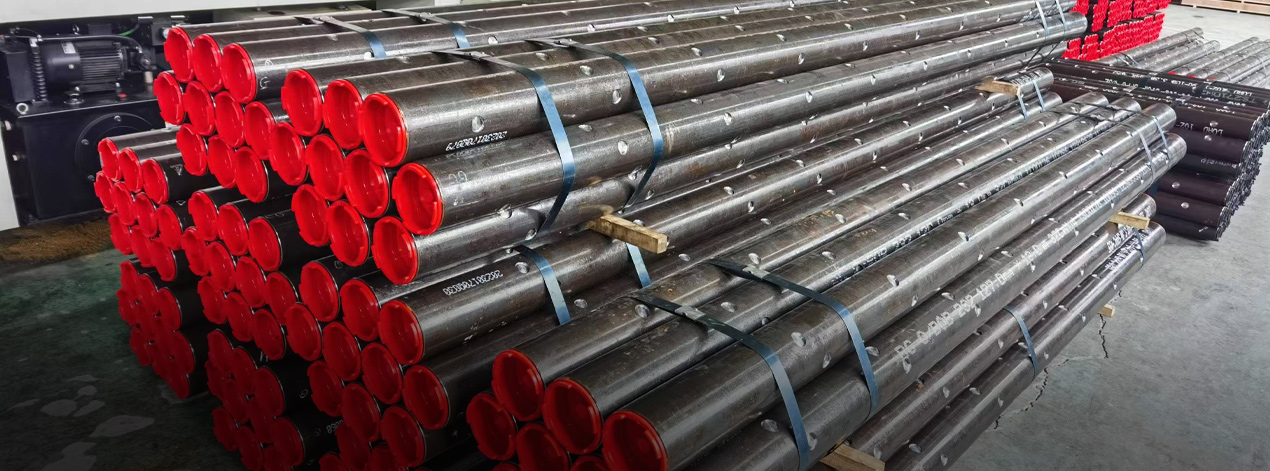
Provides deep penetration and high shot density, maximizing reservoir contact and fracture initiation efficiency across long horizontal wellbore sections.
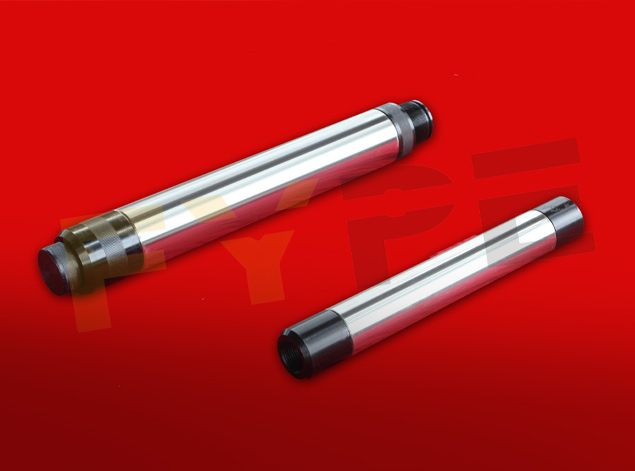
Detects casing collars for precise depth correlation in horizontal wells, ensuring perforation clusters are placed at the exact designed intervals for optimal multi-stage fracturing performance.
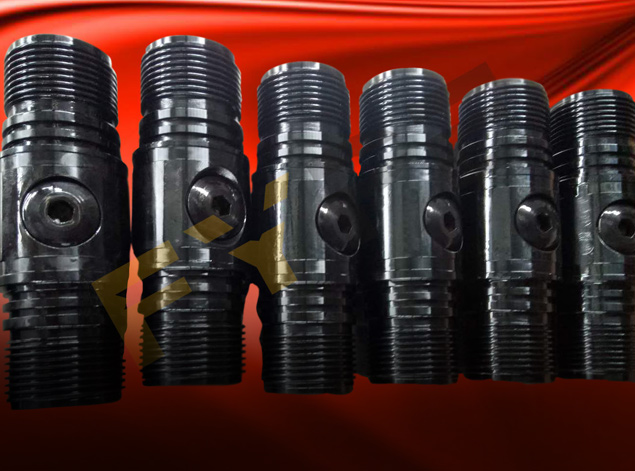
Critical connecting components used in multi-stage perforating systems, engineered for reliable mechanical and electrical continuity across long horizontal wellbore assemblies.
State-of-the-art manufacturing facilities engineered for precision, consistency, and scale in horizontal perforating system production.








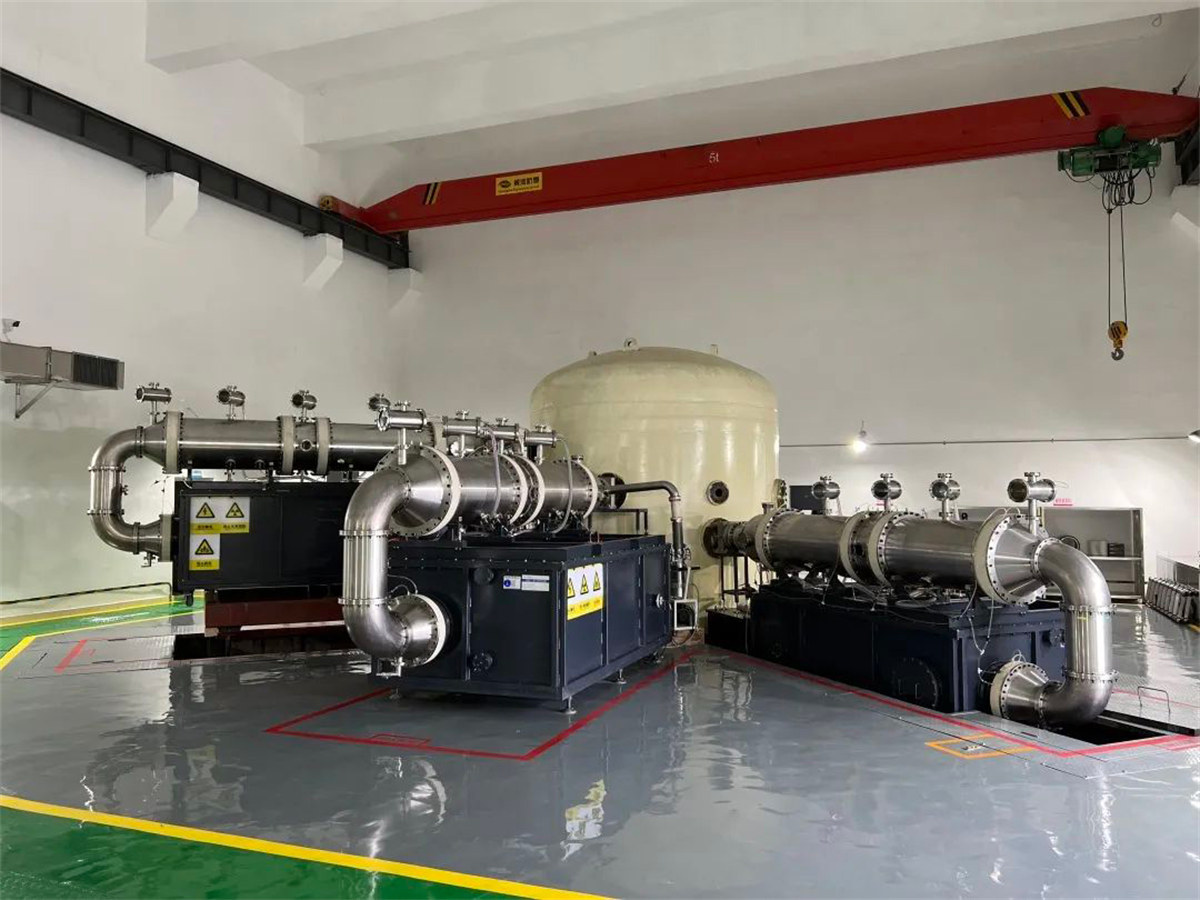
At FYPE, we believe every horizontal well deserves precision perforating, reliability under extreme downhole conditions, and excellence in technical support. Whether you require high-performance perforating tools for a 100-stage shale gas campaign or dependable through-tubing systems for well re-stimulation, we are your trusted partner in the oil and gas industry. Our engineering team works closely with operators and service companies to customize perforating programs that maximize multi-stage fracturing performance and well economics.
Inquiry Now
A comprehensive portfolio of perforating systems engineered for every multi-stage fracturing scenario — from ultra-HTHP deep wells to slim through-tubing re-stimulation operations.