
 +86-15829394411



0102030405
90° vs 120° vs 180° ? How to Select the Right Perforating Gun Phase Angle
2026-05-15
In oil and gas well completion, perforating performance directly affects production efficiency, well productivity, and long-term reservoir performance. Among the many design parameters of a perforating system, the phase angle of the perforating gun is one of the most important factors influencing perforation distribution and formation connectivity. Common phase angles include 90°, 120°, and 180°, each designed for different well conditions and completion objectives.
What Is the Phase Angle of a Perforating Gun?
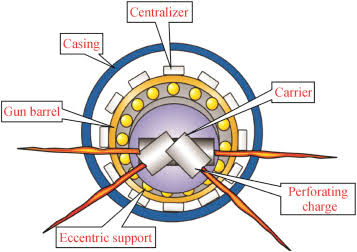
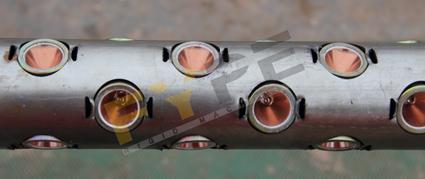
The phase angle refers to the angular spacing between shaped charge exit holes around the perforating gun carrier. In simple terms, it determines the direction and distribution pattern of the perforation tunnels created in the casing and formation.
Different phase angles provide different perforation coverage and mechanical behavior inside the wellbore. Selecting the correct phase angle can improve flow efficiency, reduce sand production risks, and optimize stimulation performance.
90° Phase Angle
A 90° phased perforating gun distributes charges evenly around the casing, typically with four shots per plane. This configuration provides excellent circumferential coverage and is widely used in vertical wells and conventional reservoir completions. Advantages include:
- Better perforation distribution around the wellbore
- Improved formation connectivity
- Reduced stress concentration on one side of the casing
90° phasing is often selected when operators require balanced productivity and uniform reservoir drainage.
120° Phase Angle
The 120° phase angle is commonly used in high-shot-density applications and deviated wells. With charges spaced evenly at 120 degrees, this configuration creates a stable perforation pattern while maintaining good penetration performance. Key benefits include:
- Efficient perforation coverage
- Suitable for directional and horizontal wells
- Reduced interference between adjacent perforation tunnels
This phase angle is popular in modern unconventional reservoir development where optimized stimulation and fracture initiation are critical.
180° Phase Angle
A 180° phased gun positions charges on opposite sides of the carrier. This design concentrates perforation energy in two directions and is frequently used in specific completion strategies, including oriented perforating operations. Its main advantages are:
- Deeper penetration capability
- Lower gun carrier stress in certain applications
- Better directional control for fracture initiation
180° phasing is often preferred when operators aim to align perforations with maximum stress directions or require limited-entry perforating designs.
Choosing the Right Phase Angle
There is no universal solution for perforating design. The optimal phase angle depends on several factors, including:
- Reservoir characteristics
- Well trajectory
- Completion method
- Shot density requirements
- Fracturing strategy
A properly selected perforating gun configuration can significantly improve production performance and operational reliability.
As a professional perforating gun manufacturer, we provide customized perforating solutions designed to meet different reservoir and well completion challenges. Our engineering team supports customers with reliable gun systems, optimized phasing options, and high-performance perforating technology for efficient and safe operations worldwide.