
 +86-15829394411



0102030405
Beyond Penetration: Why Perforation Quality Determines Long-Term Well Productivity
2026-08-17
In oil and gas completion operations, perforating is the critical step that establishes communication between the reservoir and the wellbore. The quality of this connection has a direct influence on fluid flow, production efficiency, and ultimately the economic performance of the well.
When evaluating perforating performance, penetration depth is often one of the first parameters considered. A deeper perforation tunnel may appear to offer better reservoir access, but penetration alone does not determine how effectively a well will produce. A perforation can be deep yet contribute relatively little to production if the tunnel has poor geometry, significant crushed-zone damage, inadequate cleanup, or insufficient connection with the productive part of the formation.
For this reason, modern perforating design has moved beyond the simple question of “How deep can the charge penetrate?” The more important question is: “How effectively can the perforation create a clean, conductive flow path between the reservoir and the wellbore?”
This requires a balanced approach to shaped charge design, shot density, phasing, perforation geometry, formation characteristics, and well completion conditions.
Penetration Is Only One Part of Perforating Performance
The primary purpose of a perforating operation is to create effective flow channels through the casing and cement and into the reservoir. Penetration depth is important because the near-wellbore formation may have reduced permeability or other characteristics that restrict flow. However, simply extending the perforation tunnel farther into the formation does not automatically eliminate these problems.
The quality of the tunnel itself is equally important. The shaped charge creates a high-velocity jet that penetrates the casing, cement, and formation, but the process can also generate a crushed or compacted zone around the tunnel. Debris and formation damage may further restrict flow. If the resulting tunnel does not provide sufficient conductivity, the additional penetration may have limited value.
This is why perforation efficiency should be evaluated as a combination of penetration, tunnel geometry, cleanup, and flow conductivity, rather than as a single penetration-depth measurement.
The objective is not necessarily to achieve the deepest possible tunnel. The objective is to create a perforation that provides the most effective connection with the reservoir under the specific geological and completion conditions of the well.
Shot Density and Phasing Influence Reservoir Connectivity
Perforation design involves more than selecting the right shaped charge. The arrangement of perforations around and along the casing can have a significant effect on how fluids enter the wellbore.
Shot density determines how many flow entry points are created within a given interval. Increasing shot density can provide greater reservoir exposure and increase the total available flow area. However, simply increasing the number of perforations is not always the best solution. The optimal shot density depends on reservoir permeability, formation pressure, fluid properties, casing characteristics, and the overall completion strategy.
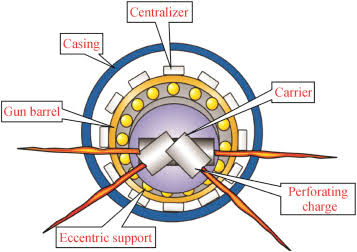
Phasing angle is another important consideration. The orientation of perforations around the casing affects the distribution of flow channels and the way those channels interact with the surrounding formation. Different phasing designs may be appropriate depending on the well trajectory, formation stress conditions, reservoir characteristics, and production objectives.
These parameters should therefore be considered together. A perforating design with excellent penetration but poor shot distribution may not perform as effectively as a system with slightly lower penetration but a better overall perforation pattern.
In other words, perforating is an optimization problem rather than a competition for maximum penetration depth.
Tunnel Quality, Cleanup, and Skin Damage Matter
Once the perforation has been created, the condition of the tunnel becomes critical to production performance. The flow path must allow reservoir fluids to move toward the wellbore with as little resistance as practical.
During perforation, the formation immediately surrounding the tunnel can experience crushing and compaction. Depending on the formation and perforating conditions, debris may also remain within or around the perforation tunnels. These effects can reduce effective permeability and increase pressure losses near the wellbore.
This is where the concepts of tunnel cleanup and skin damage become important.
A clean and conductive perforation tunnel can provide a more efficient pathway for oil and gas. In contrast, a tunnel surrounded by significant formation damage may create additional flow resistance, limiting the benefit of an otherwise high-performance shaped charge.
Perforating conditions, formation characteristics, charge design, and completion pressure conditions can all influence the final tunnel quality. Therefore, perforating performance should be considered as part of the overall completion system rather than as an isolated explosive event.
The best perforating solution is one that creates a useful flow path while minimizing unnecessary damage to the formation.
Shaped Charge Design Directly Influences Perforation Quality
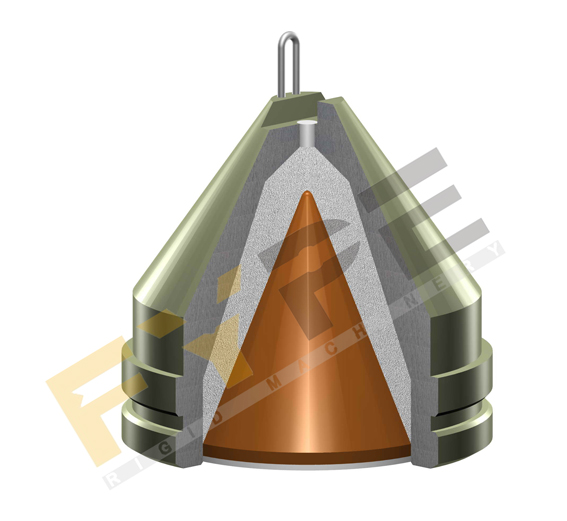
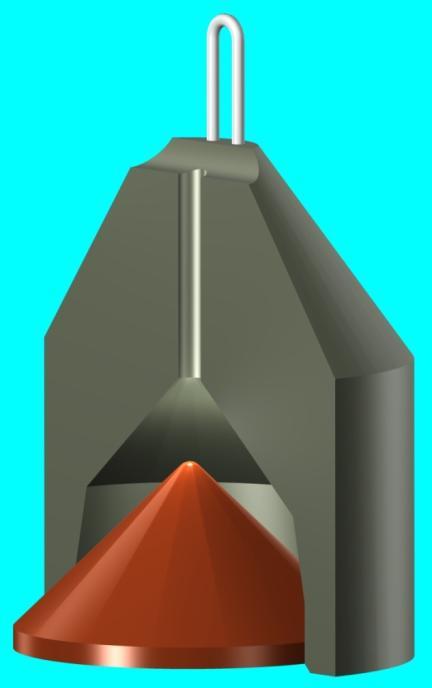
The shaped charge is at the center of this process. Its design determines how explosive energy is converted into a high-velocity jet and ultimately influences the resulting perforation geometry.
Different shaped charge designs can produce different combinations of penetration depth, entrance-hole characteristics, tunnel diameter, and tunnel geometry. The optimal balance depends on the reservoir and completion objectives.
For example, a formation requiring deep penetration may favor a charge design with strong penetration capability, while another application may place greater emphasis on tunnel diameter and flow efficiency. In a particular completion, casing thickness, cement properties, formation strength, reservoir pressure, and production requirements may all influence charge selection.
This is why there is no single “best” shaped charge for every well.
A high-performance perforating system should match the charge design to the gun configuration and the actual well conditions. Gun diameter, shot density, phasing, charge orientation, and deployment method should be considered as part of one integrated design.
For oilfield service companies, this approach can be particularly important when working across different fields and completion programs. Equipment that performs well in one reservoir may not necessarily deliver the same results in another.
Selecting a Perforating System Based on the Reservoir
The most effective perforating strategy begins with understanding the reservoir and completion objectives.
Sandstone, carbonate, tight, and naturally fractured reservoirs can respond differently to perforation. Similarly, vertical wells, highly deviated wells, and horizontal wells can present very different operational requirements.
The selection process should therefore consider the complete application, including formation characteristics, casing size, well pressure and temperature, completion configuration, target interval, production objectives, and deployment method.
For service companies, this also means that flexibility in perforating equipment can be valuable. Modular gun systems, different charge configurations, reliable firing systems, and selective firing technologies can provide more options when designing solutions for different well conditions.
As completion designs become more sophisticated, the ability to control where, how, and when perforations are created becomes increasingly important. Modern selective firing systems, for example, can provide greater flexibility for multi-zone operations and help reduce unnecessary trips into the well.
The success of a perforating operation should not be judged by penetration depth alone. Perforation quality is ultimately about how effectively the completed perforation connects the reservoir to the wellbore and supports sustained fluid flow.
Shot density, phasing angle, tunnel geometry, tunnel cleanup, formation damage, shaped charge performance, and reservoir characteristics all contribute to the final result. Optimizing these factors together can provide a more effective perforation system and better long-term well productivity.
For operators and oilfield service companies, the right question is therefore not simply “How deep can the perforation go?” but “How effectively will the perforation perform in this specific reservoir?”
That shift in perspective is important when selecting perforating equipment and designing completion programs.