
 +86-15829394411



0102030405
Oriented Perforating: A Controlled Solution for Horizontal Well Completion
2026-08-31
In oil and gas well completion, perforation direction can be an important consideration, particularly in horizontal wells. Different perforating methods and parameters can affect how fluids flow from the reservoir into the wellbore. For this reason, many horizontal wells require a controlled perforation pattern that matches the reservoir characteristics and well trajectory. Oriented Perforating provides a practical way to control the direction of perforation charges and improve the suitability of the perforating system for specific completion requirements.
The basic principle of Oriented Perforating is to control the relative orientation of the perforating gun, charge carrier, and shaped charges so that the charges are positioned in a predetermined direction before firing. Based on how the orientation is achieved, directional perforating can generally be divided into two methods: external-oriented perforating and internal-oriented perforating.
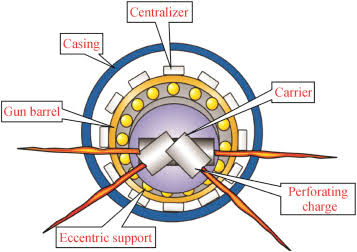
External-oriented perforating achieves directional control through the coordinated positioning of several components. The orientation monitoring device works with the guide, while the guide is oriented with the perforating gun and eccentric gun tail. The perforating gun is then aligned with the charge carrier, and the charge carrier is aligned with the shaped charges. When multiple guns are connected, the orientation between individual guns is also controlled to maintain the required perforation direction throughout the gun string.
The external orientation method is based on an eccentric structure that lowers the center of gravity of the gun. A flexible joint and directional monitoring device are installed at the upper end of the gun to help maintain and monitor its orientation. Through the coordinated positioning of these components, the perforating gun can be oriented according to the requirements of the completion design.
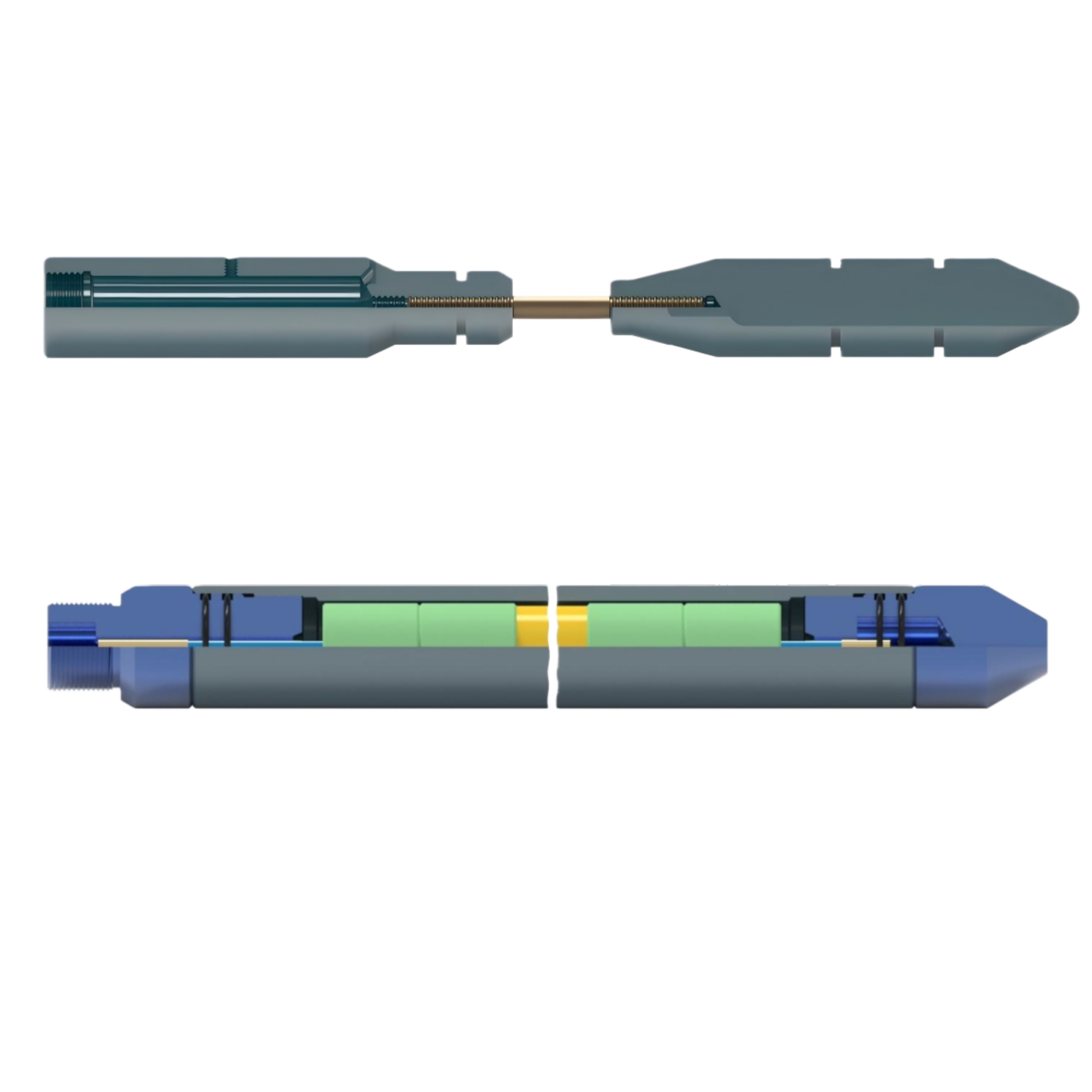
Internal-oriented perforating uses a different configuration. Each oriented perforating gun contains an independent positioning system inside the gun body. An eccentric center-of-gravity design allows the perforating charges to automatically orient under gravity while inside the gun. Because the positioning system is integrated into the gun, the orientation process is less dependent on external components.
One important advantage of internal-oriented perforating is that it allows a relatively larger-diameter perforating gun to be used inside the casing. This provides more flexibility for applications requiring deep penetration, high shot density, and large hole diameter. The internal positioning structure can also help reduce the possibility of the gun becoming stuck or encountering excessive resistance while running into or pulling out of the well.
Another feature is that the internal positioning system is less affected by the casing, which helps maintain accurate positioning during the perforating operation. This makes internal-oriented systems suitable for applications where both gun size and orientation accuracy are important considerations.
The selection of an orientation method should be based on the specific well and completion requirements. Factors such as casing size, well trajectory, reservoir characteristics, required perforation direction, shot density, penetration requirements, and downhole operating conditions should be considered when designing the perforating system.
The need for Oriented Perforating is particularly relevant to horizontal wells. Horizontal wells can increase reservoir contact and provide high production potential with a relatively small production pressure differential. However, the relationship between the wellbore trajectory and the reservoir can vary from one well to another. Reservoir lithology and the position of interlayers encountered by the horizontal section can also affect the appropriate perforating strategy.
Selecting the right orientation method according to these conditions can help establish a perforation pattern that is better suited to the target reservoir. Instead of applying the same perforation arrangement to every well, operators can select the orientation method and perforating parameters according to the actual completion requirements.
For applications requiring larger-diameter guns, high shot density, deep penetration, or large-diameter perforation holes, internal-oriented systems may provide greater design flexibility. External-oriented systems, meanwhile, provide a practical solution where directional monitoring and coordinated orientation of the gun string are required. The appropriate choice depends on the well design and the specific objectives of the perforating operation.
If you are looking for an Oriented Perforating gun or a customized directional perforating solution, contact FYPE China with your casing specifications, well trajectory, perforation requirements, and operating conditions. Our team can help you evaluate a suitable perforating gun and related completion tools for your application.