+86-15829394411
Leave Your Message
-
Contact WhatsApp
-
 Contact Phone
-
 Contact Email
In the modern landscape of oil and gas extraction, Multi-Stage Fracturing Operations have become the backbone of unconventional resource recovery. As global demand for energy fluctuates and the complexity of shale reservoirs increases, the industry has shifted from "brute force" fracturing to "precision-engineered" stimulation. At the heart of this evolution lies Oriented Perforating.
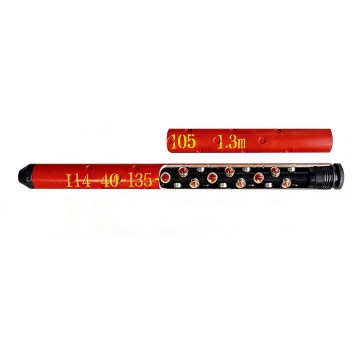
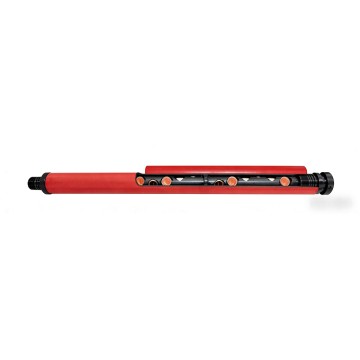
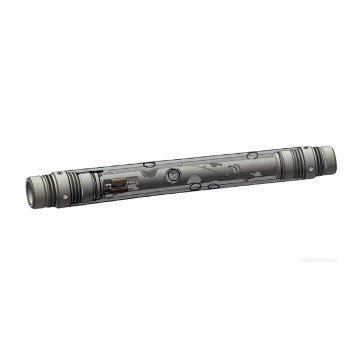
Oriented perforating is the process of aligning perforating charges in a specific direction relative to the formation's stress field or the wellbore's geometry. In horizontal wells, which dominate multi-stage operations, traditional 360-degree phasing often leads to "tortuous" fracture paths. These paths increase breakdown pressure and reduce the efficiency of the fracture treatment. By using oriented systems, operators can ensure that fractures initiate in the direction of maximum principal stress, leading to cleaner, more conductive channels.
The global market for oriented perforating is witnessing a CAGR of over 5.5% annually. Major players in North America and China are increasingly adopting "Plug-and-Perf" systems integrated with orientation subs to maximize Cluster Efficiency. The industry is moving away from random phasing toward 0° or 180° orientation in horizontal sections to minimize "near-wellbore friction."
In multi-stage fracturing, when multiple clusters are stimulated simultaneously, the "stress shadow" from one fracture can interfere with the next. Oriented perforating allows engineers to dictate the initiation point precisely. By orienting charges toward the high-side or low-side of the wellbore (depending on the stress regime), we can mitigate the suppressive effects of stress shadows, ensuring each cluster contributes equally to production.
One of the biggest challenges in multi-stage operations is ensuring proppant (sand) actually reaches the deep reservoir. Non-oriented perforations often create "micro-fractures" that bridge off with sand quickly, leading to premature screen-outs. Oriented perforating creates a direct path, reducing the energy required to carry proppant and allowing for higher concentrations of sand, which directly translates to higher EUR (Estimated Ultimate Recovery).
Our lab at FYPE carries out real-core target tests in simulated reservoirs. We have observed that oriented perforating reduces "tortuosity" by up to 60% compared to standard spiral phasing. This is critical for high-viscosity slickwater fracturing where fluid friction is a major operational constraint.

Expetro Energy Service Co., Ltd. (FYPE) is a leading manufacturer of downhole perforating systems in China, dedicated to the research, development, and production of shaped charges, perforating guns, and associated accessories for oil and gas completions.
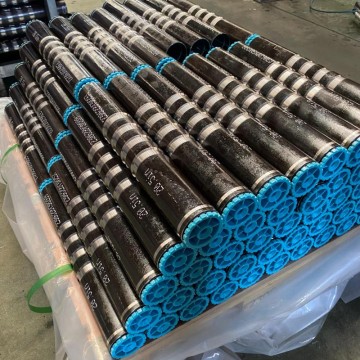
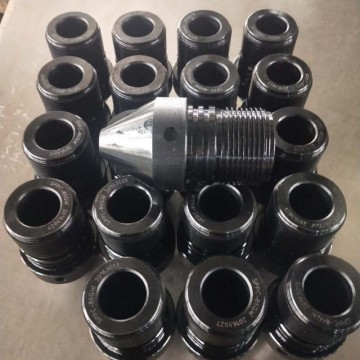
Equipped with state-of-the-art automated production and inspection lines, we deliver over 2.5 million shaped charges and 500,000 meters of perforating guns annually — meeting diverse customer requirements across the global market. Every stage of our production process strictly adheres to the API Q1 Quality Management System.
Learn More About Our CapabilitiesOur professional inspection team operates under a quality management system certified to API Q1 and ISO 9001 standards, ensuring product reliability and superior performance.
Our daily capacity of shaped charges can reach 10,000. The perforating gun production line can meet the processing of 100+ types with different specifications.
To date, our products have served customers in 38 countries worldwide and consistently earn positive feedback for performance and reliability.
With nearly 20 years of export experience, we deeply understand global market demands and deliver trusted, tailored solutions.
The future of multi-stage fracturing is digital. We are seeing several key trends that will redefine how oriented perforating is executed:
Real-time monitoring using Distributed Acoustic Sensing (DAS) is becoming common. By combining oriented perforating with fiber optics, operators can see exactly which clusters are taking fluid in real-time. This allows for "dynamic orientation" adjustments in subsequent stages of the same well.
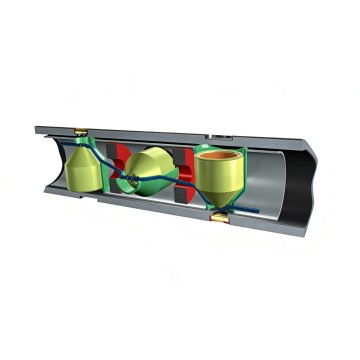
While mechanical gravity-based orientation is cost-effective, high-deviation wells and complex S-curves are driving the demand for gyroscopic orientation subs. These tools provide ±1° accuracy, ensuring that even in the most complex geometries, the perforation tunnel is perfectly aligned with the rock's natural weaknesses.
Artificial Intelligence is now being used to analyze seismic data and log-while-drilling (LWD) data to suggest the optimal orientation angle for every single cluster in a 50-stage fracturing job. FYPE is at the forefront, developing "Smart Subs" that can communicate with surface systems to confirm orientation before firing.
Oriented Perforating is no longer a luxury—it is a necessity for economic viability in shale plays. As horizontal laterals grow longer (reaching 3 miles or more), the margin for error in fracturing decreases. Precision orientation ensures that the massive investment in pumping equipment and proppant is not wasted on inefficient reservoir contact.








At FYPE, we believe every well deserves precision, reliability, and excellence. Whether you require high-performance perforating tools or dependable technical support, we are your trusted partner in the oil and gas industry.

Explore our full range of API-certified perforating solutions.